



Bedankt voor het vertrouwen het afgelopen jaar! Om jou te bedanken bieden we GRATIS verzending (in België) aan op alles gedurende de hele maand januari.
- Afhalen na 1 uur in een winkel met voorraad
- In januari gratis thuislevering in België
- Ruim aanbod met 7 miljoen producten
Bedankt voor het vertrouwen het afgelopen jaar! Om jou te bedanken bieden we GRATIS verzending (in België) aan op alles gedurende de hele maand januari.
- Afhalen na 1 uur in een winkel met voorraad
- In januari gratis thuislevering in België
- Ruim aanbod met 7 miljoen producten





€ 2,99
+ 2 punten
Omschrijving
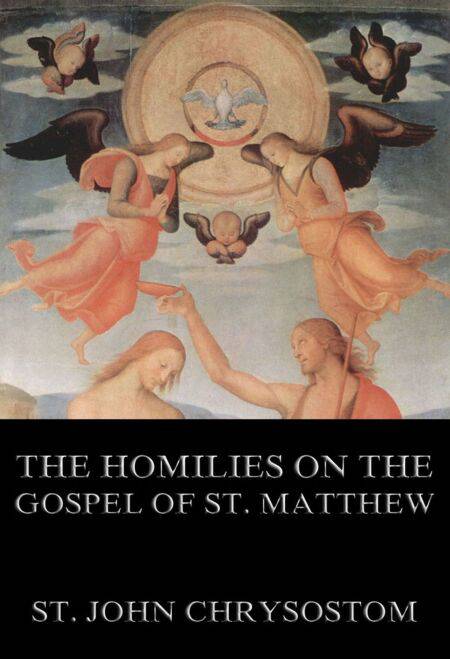
The Homilies of St. Chrysostom on St. Matthew were undoubtedly delivered at Antioch (see Hom. vii. p. 43) and probably in the latter part of the time during which he preached as a Presbyter. Montfaucon consideres his little mention of the sin of swearing a sign of his accomplished some reformation on that point by his previous exertions. In the Homilies delievered from 386 to 388, it is a constant topic; and the Homilies known to belong to that date are so numerous, as scarcely leave room for such a series as the present. These, however, contain very little to mark the period to which they belong. The argument from his reference to dissensions some time gone by, possible those between St. Meletius and Paulinus and Evagrius, in commenting on St. Matt. xxiii. 6. is not very conclusive.
A modern reader must sometimes be struck with finding in St. Chrysostom a kind of criticism, which we are apt to thing belongs only to later times. Hist main object, however, is moral, and he searches out with diligence both the meaning and the applications of particular passages, usually concluding with an eloquent exhortation to some special virtue. Some of the most remarkable of these exhortations are on the subject of Alms-giving, which he seems to have pressed with some success at last. His calculation in Hom. lxvi as to what might be done, is somewhat curious. In the end of Hom. lxxxviii. he demands a reformation as the condition of his entering on the cntroversy with Infidels. In the next Homily he discusses the evidence of the Resurrection with nearly the same arguments as would still be used against an objector.
A modern reader must sometimes be struck with finding in St. Chrysostom a kind of criticism, which we are apt to thing belongs only to later times. Hist main object, however, is moral, and he searches out with diligence both the meaning and the applications of particular passages, usually concluding with an eloquent exhortation to some special virtue. Some of the most remarkable of these exhortations are on the subject of Alms-giving, which he seems to have pressed with some success at last. His calculation in Hom. lxvi as to what might be done, is somewhat curious. In the end of Hom. lxxxviii. he demands a reformation as the condition of his entering on the cntroversy with Infidels. In the next Homily he discusses the evidence of the Resurrection with nearly the same arguments as would still be used against an objector.
Specificaties
Betrokkenen
- Auteur(s):
- Vertaler(s):
- Uitgeverij:
Inhoud
- Aantal bladzijden:
- 1099
- Taal:
- Engels
Eigenschappen
- Productcode (EAN):
- 9783849621018
- Verschijningsdatum:
- 20/07/2012
- Uitvoering:
- E-book
- Beveiligd met:
- Digital watermarking
- Formaat:
- ePub


Alleen bij Standaard Boekhandel
+ 2 punten op je klantenkaart van Standaard Boekhandel
SOLDEN


Beoordelingen
We publiceren alleen reviews die voldoen aan de voorwaarden voor reviews. Bekijk onze voorwaarden voor reviews.