



Bedankt voor het vertrouwen het afgelopen jaar! Om jou te bedanken bieden we GRATIS verzending (in België) aan op alles gedurende de hele maand januari.
- Afhalen na 1 uur in een winkel met voorraad
- In januari gratis thuislevering in België
- Ruim aanbod met 7 miljoen producten
Bedankt voor het vertrouwen het afgelopen jaar! Om jou te bedanken bieden we GRATIS verzending (in België) aan op alles gedurende de hele maand januari.
- Afhalen na 1 uur in een winkel met voorraad
- In januari gratis thuislevering in België
- Ruim aanbod met 7 miljoen producten





€ 2,99
+ 2 punten
Omschrijving
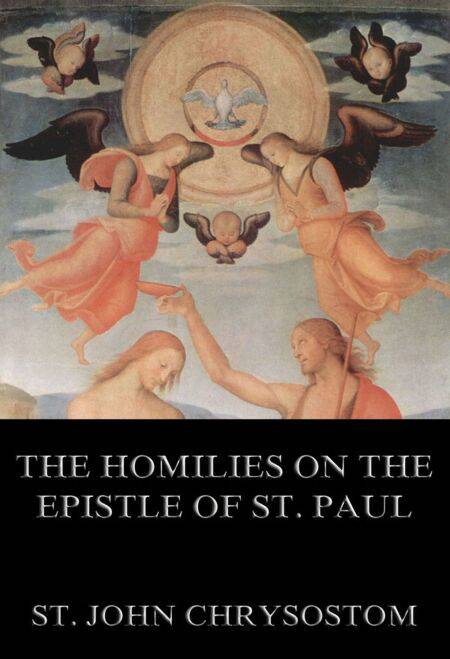
St. Chrysostom's Commentary on the Epistle to the Romans in one of the closest and most argumentative of thse he has left us. The style of the Epistle itself called for this, being such as almost constantly to remind anattentive reader of the necessity of froming some notion of the views and feelings of the persons to whom it was orginally addressed. To this point St. Crysotom has paid much attention, and has consequently obtained a far clearer view of the doctinal bearing of the Epistle than most other commentators. His early rhetorical education would probably have given him even to strong a bias toward that kind of exposition, but for his supsequent course of severe discipline and ascetic devotion. As it is, the rhetorical element in his commentary is of ver great value. His ready apprehension of the effect intended to be prodcued by the style and wording of a sentence, is often the means of clearing up what minght othewise seem obscure of even inconsistent. An example of this occurs in the beginning of the seventh cahpter, which he expounds in the 12th Homily. The illustration of uor release from the Law of Moses by partaking in the Death of Christ, by the dissolution of marriage at deat, is so stated in the Epistle as to contain an apparent inconsistency, as though the death of the Law, and the death of the personn, were confounded. And the various readings only shift the difficulty, without removing it. This, however, he has very ably shown to be, in fact, an argument a priori. Other cases will strike other persons as they happen to have found difficulty in the Text.
Specificaties
Betrokkenen
- Auteur(s):
- Vertaler(s):
- Uitgeverij:
Inhoud
- Aantal bladzijden:
- 451
- Taal:
- Engels
Eigenschappen
- Productcode (EAN):
- 9783849620998
- Verschijningsdatum:
- 20/07/2012
- Uitvoering:
- E-book
- Beveiligd met:
- Digital watermarking
- Formaat:
- ePub


Alleen bij Standaard Boekhandel
+ 2 punten op je klantenkaart van Standaard Boekhandel
SOLDEN


Beoordelingen
We publiceren alleen reviews die voldoen aan de voorwaarden voor reviews. Bekijk onze voorwaarden voor reviews.