


- Afhalen na 1 uur in een winkel met voorraad
- Gratis thuislevering in België vanaf € 30
- Ruim aanbod met 7 miljoen producten
- Afhalen na 1 uur in een winkel met voorraad
- Gratis thuislevering in België vanaf € 30
- Ruim aanbod met 7 miljoen producten





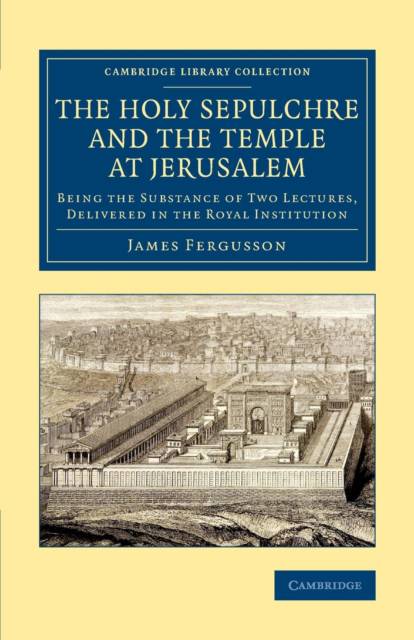
The Holy Sepulchre and the Temple at Jerusalem
Being the Substance of Two Lectures, Delivered in the Royal Institution
James Fergusson
€ 45,45
+ 90 punten
Omschrijving
Born in Scotland, James Fergusson (1808-86) spent ten years as an indigo planter in India before embarking upon a second career as an architectural historian. Despite his lack of formal training, he became an expert in the field of Indian architecture. The topography and temples of ancient Jerusalem also fascinated him. This 1865 collection of two lectures summarises his controversial topographical and architectural argument that the location where Constantine erected the original Holy Sepulchre was the Dome of the Rock on the Temple Mount. Fergusson then describes the Temple in its successive forms, arguing against the view that the rock known as the foundation stone was the site of the Jewish altar. The work is illustrated throughout with plans and drawings. Fergusson's Cave Temples of India (1880) and the two-volume revised edition of his History of Indian and Eastern Architecture (1910) are also reissued in the Cambridge Library Collection.
Specificaties
Betrokkenen
- Auteur(s):
- Uitgeverij:
Inhoud
- Aantal bladzijden:
- 172
- Taal:
- Engels
- Reeks:
Eigenschappen
- Productcode (EAN):
- 9781108080637
- Verschijningsdatum:
- 1/01/2015
- Uitvoering:
- Paperback
- Formaat:
- Trade paperback (VS)
- Afmetingen:
- 140 mm x 216 mm
- Gewicht:
- 226 g


Alleen bij Standaard Boekhandel
+ 90 punten op je klantenkaart van Standaard Boekhandel
Cadeau

AANGERADEN


Beoordelingen
We publiceren alleen reviews die voldoen aan de voorwaarden voor reviews. Bekijk onze voorwaarden voor reviews.