


- Afhalen na 1 uur in een winkel met voorraad
- Gratis thuislevering in België vanaf € 30
- Ruim aanbod met 7 miljoen producten
- Afhalen na 1 uur in een winkel met voorraad
- Gratis thuislevering in België vanaf € 30
- Ruim aanbod met 7 miljoen producten





€ 27,95
+ 55 punten
Omschrijving
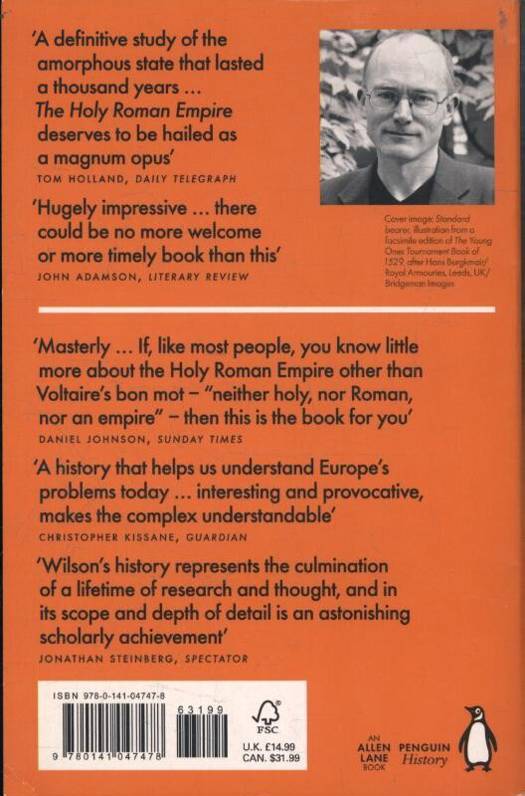
'A definitive study of the amorphous state that lasted a thousand years ... The Holy Roman Empire deserves to be hailed as a magnum opus' Tom Holland, Daily Telegraph
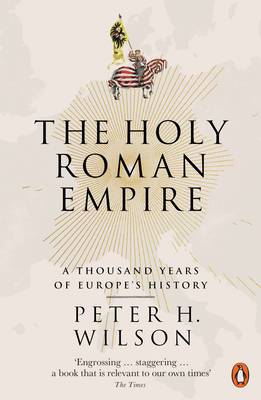
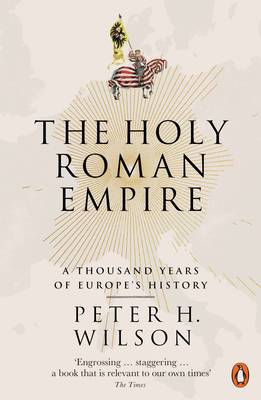
'Engrossing ... staggering ... a book that is relevant to our own times' The Times
'Masterly ... If, like most people, you know little more about the Holy Roman Empire other than Voltaire's bon mot - "neither holy, nor Roman, nor an empire" - then this is the book for you' Daniel Johnson, Sunday Times
'A history that helps us understand Europe's problems today ... interesting and provocative, makes the complex understandable' Christopher Kissane, Guardian
A great, sprawling, ancient and unique entity, the Holy Roman Empire, from its founding by Charlemagne to its destruction by Napoleon a millennium later, formed the heart of Europe. It was a great engine for inventions and ideas, it was the origin of many modern European states, from Germany to the Czech Republic, its relations with Italy, France and Poland dictated the course of countless wars - indeed European history as a whole makes no sense without it.
In this strikingly ambitious book, Peter H. Wilson explains how the Empire worked. It is not a chronological history, but an attempt to convey to readers why it was so important and how it changed over its existence. The result is a tour de force - a book that raises countless questions about the nature of political and military power, about diplomacy and the nature of European civilization and about the legacy of the Empire, which has continued to haunt its offspring, from Imperial and Nazi Germany to the European Union.
'Engrossing ... staggering ... a book that is relevant to our own times' The Times
'Masterly ... If, like most people, you know little more about the Holy Roman Empire other than Voltaire's bon mot - "neither holy, nor Roman, nor an empire" - then this is the book for you' Daniel Johnson, Sunday Times
'A history that helps us understand Europe's problems today ... interesting and provocative, makes the complex understandable' Christopher Kissane, Guardian
A great, sprawling, ancient and unique entity, the Holy Roman Empire, from its founding by Charlemagne to its destruction by Napoleon a millennium later, formed the heart of Europe. It was a great engine for inventions and ideas, it was the origin of many modern European states, from Germany to the Czech Republic, its relations with Italy, France and Poland dictated the course of countless wars - indeed European history as a whole makes no sense without it.
In this strikingly ambitious book, Peter H. Wilson explains how the Empire worked. It is not a chronological history, but an attempt to convey to readers why it was so important and how it changed over its existence. The result is a tour de force - a book that raises countless questions about the nature of political and military power, about diplomacy and the nature of European civilization and about the legacy of the Empire, which has continued to haunt its offspring, from Imperial and Nazi Germany to the European Union.
Specificaties
Betrokkenen
- Auteur(s):
- Uitgeverij:
Inhoud
- Aantal bladzijden:
- 1008
- Taal:
- Engels
Eigenschappen
- Productcode (EAN):
- 9780141047478
- Verschijningsdatum:
- 1/01/2017
- Uitvoering:
- Paperback
- Afmetingen:
- 130 mm x 196 mm
- Gewicht:
- 700 g


Alleen bij Standaard Boekhandel
+ 55 punten op je klantenkaart van Standaard Boekhandel
Cadeau

AANGERADEN


Beoordelingen
We publiceren alleen reviews die voldoen aan de voorwaarden voor reviews. Bekijk onze voorwaarden voor reviews.