


- Afhalen na 1 uur in een winkel met voorraad
- Gratis thuislevering in België vanaf € 30
- Ruim aanbod met 7 miljoen producten
- Afhalen na 1 uur in een winkel met voorraad
- Gratis thuislevering in België vanaf € 30
- Ruim aanbod met 7 miljoen producten





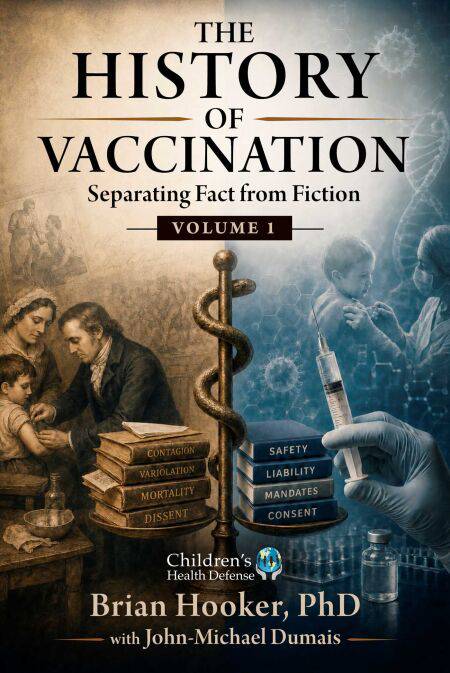
The History of Vaccination E-BOOK
Separating Fact from Fiction
Brian Hooker, John-Michael Dumais
E-book | Engels
€ 19,00
+ 19 punten
Omschrijving
The standard history of vaccines presents a linear narrative of scientific progress: from Edward Jenner’s cowpox experiment through germ theory’s triumph over infectious disease. The actual history proves far more complex.
The History of Vaccination: Separating Fact from Fiction examines vaccination’s development from eighteenth-century smallpox inoculation through the 1940s consolidation of medical authority. Drawing on primary sources, parliamentary records, and contemporary medical journals, it documents patterns typically absent from institutional accounts: vaccines contaminated with syphilis and tuberculosis, resistance movements whose sanitation-based approaches achieved lower mortality than vaccination, and the economic incentives that shaped public health policy.
The book traces four parallel developments. First, smallpox vaccination’s evolution from folk practice to legal mandate, including evidence of failures that challenged official claims. Second, the sanitation revolution’s documented reduction of infectious disease mortality, often attributed retroactively to vaccination. Third, the germ theory era’s complications: questionable trial methodologies, the tuberculin debacle, and an early vaccine industry struggling with quality control. Fourth, the institutional transformation of American medicine through Rockefeller funding, AMA professionalization, and the 1918 influenza response—changes that concentrated medical authority and marginalized alternative approaches.
This documented account examines questions the standard histories have largely avoided: What did vaccination accomplish relative to other public health interventions? Which evidence informed policy decisions, and which was discounted? How did institutions balance scientific uncertainty against public health imperatives?
The evidence has been available throughout vaccination’s history, recorded by physicians, statisticians, and public health officials as events unfolded. This book assembles it for critical examination.
The History of Vaccination: Separating Fact from Fiction examines vaccination’s development from eighteenth-century smallpox inoculation through the 1940s consolidation of medical authority. Drawing on primary sources, parliamentary records, and contemporary medical journals, it documents patterns typically absent from institutional accounts: vaccines contaminated with syphilis and tuberculosis, resistance movements whose sanitation-based approaches achieved lower mortality than vaccination, and the economic incentives that shaped public health policy.
The book traces four parallel developments. First, smallpox vaccination’s evolution from folk practice to legal mandate, including evidence of failures that challenged official claims. Second, the sanitation revolution’s documented reduction of infectious disease mortality, often attributed retroactively to vaccination. Third, the germ theory era’s complications: questionable trial methodologies, the tuberculin debacle, and an early vaccine industry struggling with quality control. Fourth, the institutional transformation of American medicine through Rockefeller funding, AMA professionalization, and the 1918 influenza response—changes that concentrated medical authority and marginalized alternative approaches.
This documented account examines questions the standard histories have largely avoided: What did vaccination accomplish relative to other public health interventions? Which evidence informed policy decisions, and which was discounted? How did institutions balance scientific uncertainty against public health imperatives?
The evidence has been available throughout vaccination’s history, recorded by physicians, statisticians, and public health officials as events unfolded. This book assembles it for critical examination.
Specificaties
Betrokkenen
- Auteur(s):
- Uitgeverij:
Inhoud
- Aantal bladzijden:
- 288
- Taal:
- Engels
Eigenschappen
- Productcode (EAN):
- 9781648212864
- Verschijningsdatum:
- 26/10/2026
- Uitvoering:
- E-book
- Beveiligd met:
- Adobe DRM
- Formaat:
- ePub


Alleen bij Standaard Boekhandel
+ 19 punten op je klantenkaart van Standaard Boekhandel
CADEAU

AANGERADEN


Beoordelingen
We publiceren alleen reviews die voldoen aan de voorwaarden voor reviews. Bekijk onze voorwaarden voor reviews.