


- Afhalen na 1 uur in een winkel met voorraad
- Gratis thuislevering in België vanaf € 30
- Ruim aanbod met 7 miljoen producten
- Afhalen na 1 uur in een winkel met voorraad
- Gratis thuislevering in België vanaf € 30
- Ruim aanbod met 7 miljoen producten





€ 61,45
+ 122 punten
Uitvoering
Omschrijving
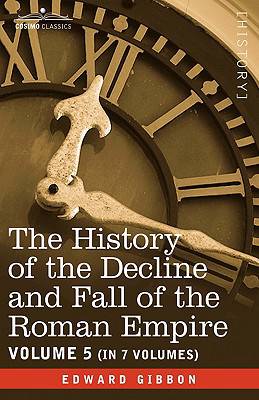
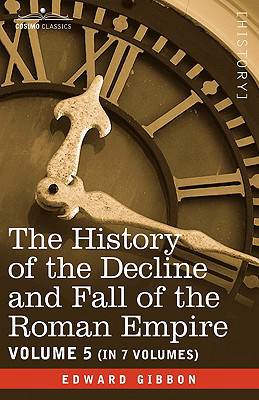
The History of the Decline and Fall of the Roman Empire is Edward Gibbon's magnum opus, written and published over a 13-year period beginning in 1776. It not only chronicles the events of the downfall starting with the end of the rule of Marcus Aurelius, but proposes a theory as to why Rome collapsed: the populace, Gibbon theorizes, lost its moral fortitude, its militaristic will, and its sense of civic duty. History is considered a classic in world literature, and Gibbon is sometimes called the first "modern historian" for his insistence upon using primary sources for his research. Many scholars today still use his highly regarded work as reference. In this fifth of seven volumes, readers will find Chapter 45 ("State of Italy Under the Lombards") through Chapter 51 ("Conquests by the Arabs"), which cover the reign of Justin II; the Lombards' conquest of Italy; the Franks' conquest of Italy; the reign of Tiberius II; the life of Gregory the Great; and the rules of Phocas and Heraclius; the development of Christianity in the Eastern Roman Empire and the councils of Ephesus, Chalcedon, and Nice; the Greek emperors of Constantinople; the rule of Charlemagne of France and the division of his empire upon his death; and the clash between the Arabs and the Eastern Roman Empire. English parliamentarian and historian EDWARD GIBBON (1737-1794) attended Magdelan College, Oxford for 14 months before his father sent him to Lausanne, Switzerland, where he continued his education. He published Essai sur l'Étude de la Littérature (1761) and other autobiographical works, including Mémoire Justificatif pour servir de Réponse à l'Exposé, etc. de la Cour de France (1779).
Specificaties
Betrokkenen
- Auteur(s):
- Uitgeverij:
Inhoud
- Aantal bladzijden:
- 564
- Taal:
- Engels
Eigenschappen
- Productcode (EAN):
- 9781605201283
- Verschijningsdatum:
- 1/07/2008
- Uitvoering:
- Hardcover
- Formaat:
- Genaaid
- Afmetingen:
- 140 mm x 216 mm
- Gewicht:
- 848 g


Alleen bij Standaard Boekhandel
+ 122 punten op je klantenkaart van Standaard Boekhandel
CADEAU

AANGERADEN


Beoordelingen
We publiceren alleen reviews die voldoen aan de voorwaarden voor reviews. Bekijk onze voorwaarden voor reviews.