


- Afhalen na 1 uur in een winkel met voorraad
- Gratis thuislevering in België vanaf € 30
- Ruim aanbod met 7 miljoen producten
- Afhalen na 1 uur in een winkel met voorraad
- Gratis thuislevering in België vanaf € 30
- Ruim aanbod met 7 miljoen producten





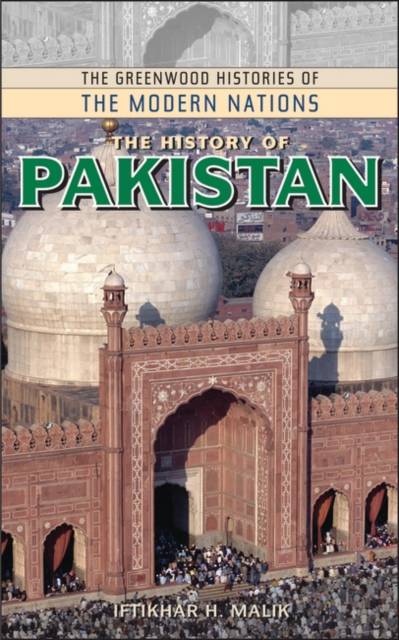
The History of Pakistan
Iftikhar Malik
€ 127,45
+ 254 punten
Omschrijving
The History of Pakistan explores the rich and intricate past of a highly diverse nation still in the process of determining its own identity. Rooted in the ancient Indus Valley Civilization, shaped by the cultures of both the Middle and Far East, and now predominantly devoted to Islam, Pakistan has emerged as a unique Indo-Muslim community, viewed with caution and curiosity by the rest of the world. In this latest volume of Greenwood's History of Modern Nations series, readers discover the foundations of modern Pakistan, from its earliest empires and shared history with India to the coming of Islam and its successful fight for independence in 1947. This highly informative guide also examines the key issues and attitudes guiding Pakistan today: their volatile feud with India over the region of Kashmir and the right to nuclear development, internal debates over the role of Islam in Pakistani society, and the unbreakable dominance of the military in political affairs. Poised between a radically changing India and the politically unstable Middle East, Pakistan is an important nation to understand as it determines its course in rapidly a changing world.
Specificaties
Betrokkenen
- Auteur(s):
- Uitgeverij:
Inhoud
- Aantal bladzijden:
- 260
- Taal:
- Engels
- Reeks:
Eigenschappen
- Productcode (EAN):
- 9780313341373
- Verschijningsdatum:
- 30/07/2008
- Uitvoering:
- Hardcover
- Formaat:
- Genaaid
- Afmetingen:
- 157 mm x 241 mm
- Gewicht:
- 530 g


Alleen bij Standaard Boekhandel
+ 254 punten op je klantenkaart van Standaard Boekhandel
Cadeau

AANGERADEN


Beoordelingen
We publiceren alleen reviews die voldoen aan de voorwaarden voor reviews. Bekijk onze voorwaarden voor reviews.