


- Afhalen na 1 uur in een winkel met voorraad
- Gratis thuislevering in België vanaf € 30
- Ruim aanbod met 7 miljoen producten
- Afhalen na 1 uur in een winkel met voorraad
- Gratis thuislevering in België vanaf € 30
- Ruim aanbod met 7 miljoen producten





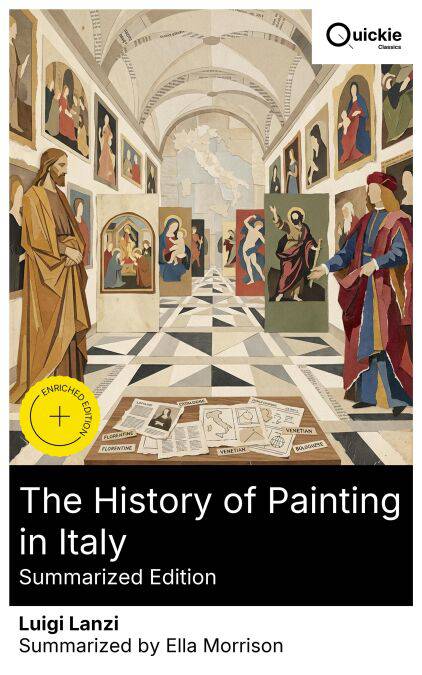
The History of Painting in Italy (Summarized Edition) E-BOOK
Enriched edition. Italian Renaissance and Artistic Schools: Techniques, Culture, and the Evolution of European Art
Luigi Lanzi
E-book | Engels
€ 1,99
+ 1 punten
Omschrijving
The History of Painting in Italy offers a rigorous survey of the peninsula's schools from the Trecento to the late eighteenth century, balancing connoisseurial attention to technique with a lucid taxonomy of regional styles. Lanzi maps the interplay of disegno and colorito, traces lineages from Giotto through Raphael, Titian, Correggio, and the Carracci, and corrects partisan narratives by grounding judgments in autopsy, documents, and inscriptions. His prose is sober and precise, embodying Enlightenment ideals while superseding Vasari's anecdotal model with a critical, comparative history. Trained as a Jesuit and later employed in Florence's grand-ducal collections, Lanzi honed philological habits and direct looking as a curator and cataloger, reorganizing galleries by schools and chronology. Extensive travels through Italy, access to archives and private cabinets, and parallel antiquarian research on the Etruscans furnished him with a uniquely panoramic view. His engagement with contemporary scholarship—from connoisseurs and classicists—shaped a method that privileges verified attribution, regional context, and the evolution of style. Students, curators, and collectors will find this a foundational synthesis and an indispensable guide to attributions, provenance, and historiography. Read it alongside Vasari to see how modern art history emerges: clearer, stricter, yet alive to local genius and national tradition.
Quickie Classics summarizes timeless works with precision, preserving the author's voice and keeping the prose clear, fast, and readable—distilled, never diluted. Enriched Edition extras: Introduction · Synopsis · Historical Context · Brief Analysis · 4 Reflection Q&As · Editorial Footnotes.
Quickie Classics summarizes timeless works with precision, preserving the author's voice and keeping the prose clear, fast, and readable—distilled, never diluted. Enriched Edition extras: Introduction · Synopsis · Historical Context · Brief Analysis · 4 Reflection Q&As · Editorial Footnotes.
Specificaties
Betrokkenen
- Auteur(s):
- Vertaler(s):
- Uitgeverij:
Inhoud
- Aantal bladzijden:
- 447
- Taal:
- Engels
Eigenschappen
- Productcode (EAN):
- 8596547883838
- Verschijningsdatum:
- 09/01/2026
- Uitvoering:
- E-book
- Beveiligd met:
- Digital watermarking
- Formaat:
- ePub


Alleen bij Standaard Boekhandel
+ 1 punten op je klantenkaart van Standaard Boekhandel
Cadeau

AANGERADEN


Beoordelingen
We publiceren alleen reviews die voldoen aan de voorwaarden voor reviews. Bekijk onze voorwaarden voor reviews.