


- Afhalen na 1 uur in een winkel met voorraad
- Gratis thuislevering in België vanaf € 30
- Ruim aanbod met 7 miljoen producten
- Afhalen na 1 uur in een winkel met voorraad
- Gratis thuislevering in België vanaf € 30
- Ruim aanbod met 7 miljoen producten





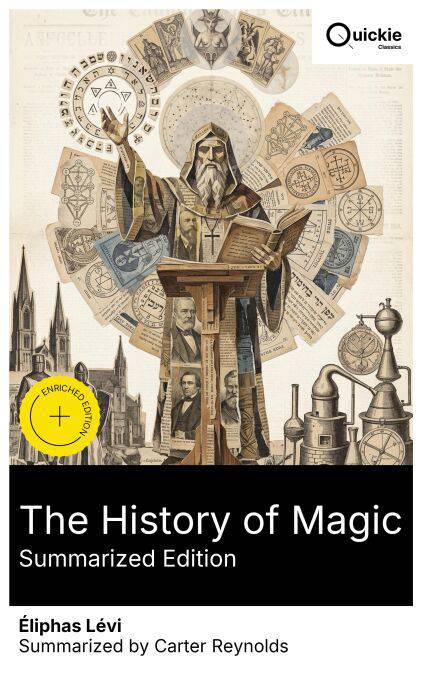
The History of Magic (Summarized Edition) E-BOOK
Enriched edition. Occult and magic traditions, symbolism, and mystical movements: from secret societies to metaphysical philosophy shaping esoteric practice
Éliphas Lévi
E-book | Engels
€ 1,99
+ 1 punten
Omschrijving
The History of Magic (1860) surveys rites, symbols, and doctrines from the Kabbalah and Hermeticism to the Templars, alchemists, and Renaissance magi, binding them by Lévi's notions of the astral light and equilibrium. Its oracular, aphoristic style mingles citation with legend, a Romantic historiography that helped inaugurate the modern occult revival. Tarot, Christian mysticism, and figures like Baphomet are recast as emblems of reconciled opposites. Éliphas Lévi, born Alphonse Louis Constant, trained for the priesthood, turned to radical Catholic journalism, and briefly suffered imprisonment before the failures of 1848 redirected him to esoteric study. A self-taught Hebraist steeped in patristic and Renaissance sources, he sought to reconcile faith and reason, making magic a moral science governed by symbol and disciplined imagination. Read critically yet attentively, this volume remains a cornerstone for historians of religion, literature, and Western esotericism. Its conjectures are nineteenth‑century, but its synthesis proved formative. For readers interested in how occult modernity was imagined—with fervor, erudition, and polemical verve—The History of Magic is an exacting, rewarding guide.
Quickie Classics summarizes timeless works with precision, preserving the author's voice and keeping the prose clear, fast, and readable—distilled, never diluted. Enriched Edition extras: Introduction · Synopsis · Historical Context · Brief Analysis · 4 Reflection Q&As · Editorial Footnotes.
Quickie Classics summarizes timeless works with precision, preserving the author's voice and keeping the prose clear, fast, and readable—distilled, never diluted. Enriched Edition extras: Introduction · Synopsis · Historical Context · Brief Analysis · 4 Reflection Q&As · Editorial Footnotes.
Specificaties
Betrokkenen
- Auteur(s):
- Vertaler(s):
- Uitgeverij:
Inhoud
- Aantal bladzijden:
- 206
- Taal:
- Engels
Eigenschappen
- Productcode (EAN):
- 8596547882053
- Verschijningsdatum:
- 9/01/2026
- Uitvoering:
- E-book
- Beveiligd met:
- Digital watermarking
- Formaat:
- ePub


Alleen bij Standaard Boekhandel
+ 1 punten op je klantenkaart van Standaard Boekhandel
Cadeau

AANGERADEN


Beoordelingen
We publiceren alleen reviews die voldoen aan de voorwaarden voor reviews. Bekijk onze voorwaarden voor reviews.