


- Afhalen na 1 uur in een winkel met voorraad
- Gratis thuislevering in België vanaf € 30
- Ruim aanbod met 7 miljoen producten
- Afhalen na 1 uur in een winkel met voorraad
- Gratis thuislevering in België vanaf € 30
- Ruim aanbod met 7 miljoen producten





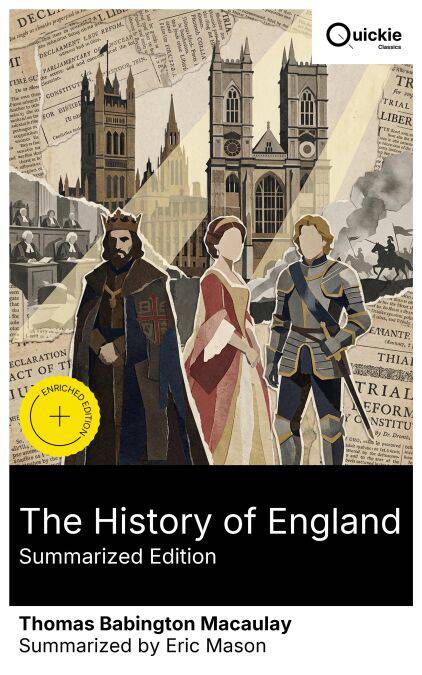
The History of England (Summarized Edition) E-BOOK
Enriched edition. From the Stuart Era to the Glorious Revolution: British constitutionalism, political upheaval, and Enlightenment perspectives
Thomas Babington Macaulay
E-book | Engels
€ 1,99
+ 1 punten
Omschrijving
Across five volumes, The History of England traces the nation from the accession of James II through the Glorious Revolution to the early reign of William III, ending near 1702. Macaulay stages set pieces—the Seven Bishops' trial, Londonderry, the Boyne—alongside keen portraits of James, William and Mary, Sunderland, and Marlborough. With oratorical, pictorial prose anchored in pamphlets, diaries, and state papers, the work exemplifies Victorian, Whig historiography: a narrative of constitutional liberty, Protestant polity, and commercial modernity. Thomas Babington Macaulay (1800–1859)—essayist, Whig MP, cabinet minister, and member of the Supreme Council of India—united political experience with archival industry. The son of abolitionist reformers, he wrote with moral assurance and a statesman's sense of institutions. Classical schooling and parliamentary oratory shaped his periodic sentences and sharp judgments; access to state papers and private collections supplied the evidence that undergirds his sweeping generalizations. Readers of political and religious history, constitutional theory, and narrative nonfiction will find this classic both exhilarating and disputatious. Approach it alongside revisionist work to temper its Whig teleology; read it for its momentum, color, and argumentative clarity. Few histories better animate the emergence of modern British governance.
Quickie Classics summarizes timeless works with precision, preserving the author's voice and keeping the prose clear, fast, and readable—distilled, never diluted. Enriched Edition extras: Introduction · Synopsis · Historical Context · Author Biography · Brief Analysis · 4 Reflection Q&As · Editorial Footnotes.
Quickie Classics summarizes timeless works with precision, preserving the author's voice and keeping the prose clear, fast, and readable—distilled, never diluted. Enriched Edition extras: Introduction · Synopsis · Historical Context · Author Biography · Brief Analysis · 4 Reflection Q&As · Editorial Footnotes.
Specificaties
Betrokkenen
- Auteur(s):
- Uitgeverij:
Inhoud
- Aantal bladzijden:
- 794
- Taal:
- Engels
Eigenschappen
- Productcode (EAN):
- 8596547879251
- Verschijningsdatum:
- 9/01/2026
- Uitvoering:
- E-book
- Beveiligd met:
- Digital watermarking
- Formaat:
- ePub


Alleen bij Standaard Boekhandel
+ 1 punten op je klantenkaart van Standaard Boekhandel
Cadeau

AANGERADEN


Beoordelingen
We publiceren alleen reviews die voldoen aan de voorwaarden voor reviews. Bekijk onze voorwaarden voor reviews.