


- Afhalen na 1 uur in een winkel met voorraad
- Gratis thuislevering in België vanaf € 30
- Ruim aanbod met 7 miljoen producten
- Afhalen na 1 uur in een winkel met voorraad
- Gratis thuislevering in België vanaf € 30
- Ruim aanbod met 7 miljoen producten




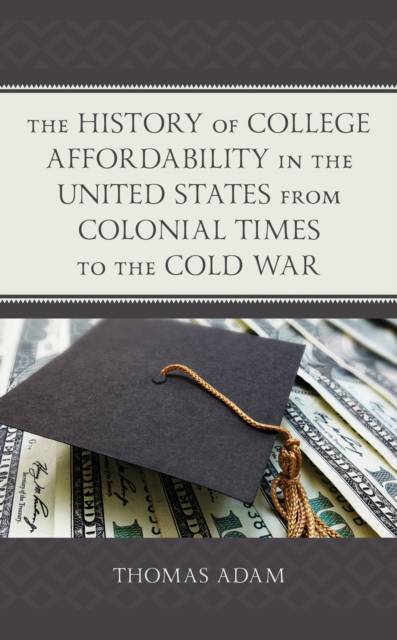
The History of College Affordability in the United States from Colonial Times to the Cold War
Thomas Adam
Hardcover | Engels
€ 220,45
+ 440 punten
Omschrijving
This book examines how tuition and student loans became an accepted part of college costs in the first half of the twentieth century. The author argues that college was largely free to nineteenth-century college students since local and religious communities, donors, and the state agreed to pay the tuition bill with the expectation that the students would serve society upon graduation. College education was essentially considered a public good. This arrangement ended after 1900. The increasing secularization and professionalization of college education as well as changes in the socio-economic composition of the student body--which included more and more students from well-off families--caused educators, college administrators, and donors to argue that students pursued a college degree for their own advancement and therefore should be made to pay for it. Students were expected to pay tuition themselves and to take out student loans in order to fund their education.
Specificaties
Betrokkenen
- Auteur(s):
- Uitgeverij:
Inhoud
- Aantal bladzijden:
- 214
- Taal:
- Engels
Eigenschappen
- Productcode (EAN):
- 9781498588430
- Verschijningsdatum:
- 13/10/2020
- Uitvoering:
- Hardcover
- Formaat:
- Genaaid
- Afmetingen:
- 152 mm x 229 mm
- Gewicht:
- 485 g



Alleen bij Standaard Boekhandel
+ 440 punten op je klantenkaart van Standaard Boekhandel
CADEAU

AANGERADEN


Beoordelingen
We publiceren alleen reviews die voldoen aan de voorwaarden voor reviews. Bekijk onze voorwaarden voor reviews.