



- Afhalen na 1 uur in een winkel met voorraad
- In januari gratis thuislevering in België
- Ruim aanbod met 7 miljoen producten
- Afhalen na 1 uur in een winkel met voorraad
- In januari gratis thuislevering in België
- Ruim aanbod met 7 miljoen producten





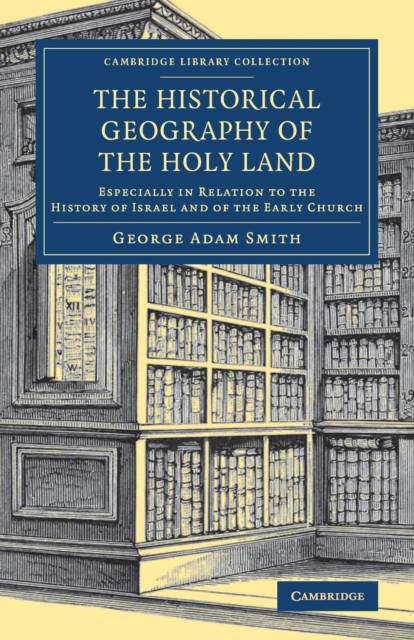
The Historical Geography of the Holy Land
Especially in Relation to the History of Israel and of the Early Church
George Adam Smith
€ 120,95
+ 241 punten
Uitvoering
Omschrijving
This book was immediately recognised on its publication in 1894 as a major work of scholarship, and reached twenty-five editions during its author's lifetime. The intention of George Adam Smith (1856-1942) was to produce a work which would 'give a vision of the land as a whole' and help the reader 'to hear through it the sound of running history'. Smith, an enthusiastic alpinist, had studied divinity in Edinburgh, and first visited Palestine in 1880, travelling around the country on foot. The book was written while Smith was teaching at Glasgow, and working on various social projects in Scotland. His detailed knowledge of the territory, together with his wide familiarity with the archaeological and historical background, gives the work authority. The book places the land in its historical context, and describes the physical geography and climate; the readability of its style is enhanced by detailed maps, some in colour.
Specificaties
Betrokkenen
- Auteur(s):
- Uitgeverij:
Inhoud
- Aantal bladzijden:
- 728
- Taal:
- Engels
- Reeks:
Eigenschappen
- Productcode (EAN):
- 9781108075398
- Verschijningsdatum:
- 31/08/2017
- Uitvoering:
- Paperback
- Formaat:
- Trade paperback (VS)
- Afmetingen:
- 140 mm x 216 mm
- Gewicht:
- 907 g


Alleen bij Standaard Boekhandel
+ 241 punten op je klantenkaart van Standaard Boekhandel
Cadeau

AANGERADEN


Beoordelingen
We publiceren alleen reviews die voldoen aan de voorwaarden voor reviews. Bekijk onze voorwaarden voor reviews.