


- Afhalen na 1 uur in een winkel met voorraad
- Gratis thuislevering in België vanaf € 30
- Ruim aanbod met 7 miljoen producten
- Afhalen na 1 uur in een winkel met voorraad
- Gratis thuislevering in België vanaf € 30
- Ruim aanbod met 7 miljoen producten





€ 169,95
+ 339 punten
Omschrijving
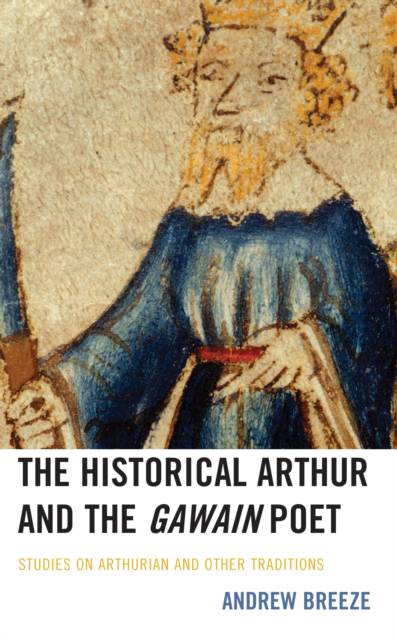
The Historical Arthur and The Gawain Poet: Studies on Arthurian and Other Traditions delves into the origins of Arthur and reveals the author of the famous Gawain Manuscript. Its first part contains evidence for the Arthur of film and legend as a real person, a Celtic commander (not a king) who fought battles in North Britain during the terrible volcanic winter of 536-7, before dying a hero's death in a conflict on Hadrian's Wall. Its second part moves on to Sir Gawain and the Green Knight, an Arthurian poem on magic, near-death, and near-seduction. Its author has always been unknown, but Dr. Breeze uses arguments of the US scholar Ann W. Astell to date the text to 1387 and name the poet as Sir John Stanley (d. 1414), a Cheshire and Lancashire grandee. He can now be recognized as an artist of genius, comparable to Chaucer himself. What is said in this book on John Stanley and his circle thus allows the greatest advance in Arthurian Studies since 1934, when Walter Oakeshott discovered the Winchester Malory amongst manuscripts of an English school library.
Specificaties
Betrokkenen
- Auteur(s):
- Uitgeverij:
Inhoud
- Aantal bladzijden:
- 164
- Taal:
- Engels
- Reeks:
Eigenschappen
- Productcode (EAN):
- 9781666929546
- Verschijningsdatum:
- 15/02/2023
- Uitvoering:
- Hardcover
- Formaat:
- Genaaid
- Afmetingen:
- 152 mm x 229 mm
- Gewicht:
- 412 g


Alleen bij Standaard Boekhandel
+ 339 punten op je klantenkaart van Standaard Boekhandel
Cadeau

AANGERADEN


Beoordelingen
We publiceren alleen reviews die voldoen aan de voorwaarden voor reviews. Bekijk onze voorwaarden voor reviews.