


- Afhalen na 1 uur in een winkel met voorraad
- Gratis thuislevering in België vanaf € 30
- Ruim aanbod met 7 miljoen producten
- Afhalen na 1 uur in een winkel met voorraad
- Gratis thuislevering in België vanaf € 30
- Ruim aanbod met 7 miljoen producten





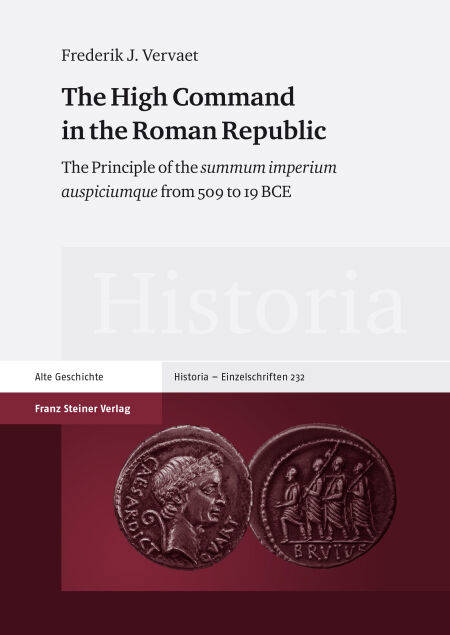
The High Command in the Roman Republic E-BOOK
The Principle of the summum imperium auspiciumque from 509 to 19 BCE
Frederik J. Vervaet
€ 81,00
+ 81 punten
Omschrijving
While the terminology has long been noted, the republican principle of the summum imperium auspiciumque, the high command and the prevailing auspices, has never been subject to comprehensive scrutiny. This enquiry for the first time identifies this principle as a coherent concept in Roman constitutional and administrative practice, being the senatorial oligarchy's foremost instrument to reconcile collegiate rule with the necessity of a unified high command. After defining the relevant terms and the scope of the high command both in Rome and in the field, a number of case studies yield striking new insights into the constitutional ramifications for the allocation of public triumphs, the position of the consuls in the provinces, and the official hierarchy in combined commands, highlighting the fascinating interplay between these largely customary rules of engagement and the nobility's own code of honour. This study also casts a provocative new light on how the high command was gradually monopolized by dynasts in the tumultuous period between Sulla's dictatorship and the emergence of the Augustan monarchy. Finally, a postscript addresses the vexed question of the lex curiata de imperio.
Specificaties
Betrokkenen
- Auteur(s):
- Uitgeverij:
Inhoud
- Aantal bladzijden:
- 369
- Taal:
- Engels
- Reeks:
Eigenschappen
- Productcode (EAN):
- 9783515107884
- Verschijningsdatum:
- 20/10/2014
- Uitvoering:
- E-book
- Beveiligd met:
- Digital watermarking
- Formaat:


Alleen bij Standaard Boekhandel
+ 81 punten op je klantenkaart van Standaard Boekhandel
Cadeau

AANGERADEN


Beoordelingen
We publiceren alleen reviews die voldoen aan de voorwaarden voor reviews. Bekijk onze voorwaarden voor reviews.