


- Afhalen na 1 uur in een winkel met voorraad
- Gratis thuislevering in België vanaf € 30
- Ruim aanbod met 7 miljoen producten
- Afhalen na 1 uur in een winkel met voorraad
- Gratis thuislevering in België vanaf € 30
- Ruim aanbod met 7 miljoen producten





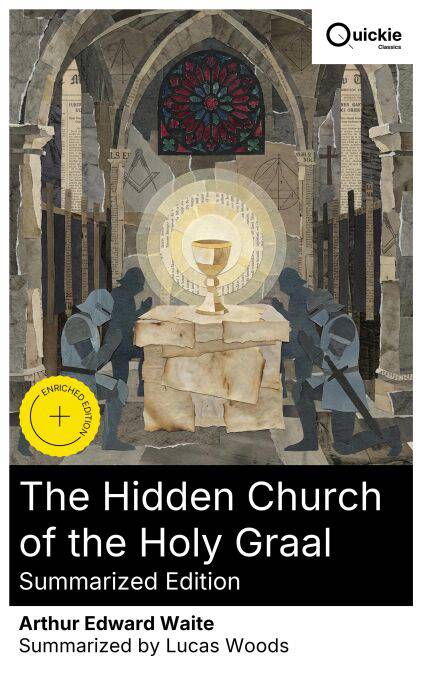
The Hidden Church of the Holy Graal (Summarized Edition) E-BOOK
Enriched edition. Esoteric study of the Grail's mystical symbolism, Arthurian origins, and Christian mysticism in medieval romance
Arthur Edward Waite
E-book | Engels
€ 1,99
+ 1 punten
Omschrijving
In The Hidden Church of the Holy Graal, Arthur Edward Waite reads the medieval Grail corpus as veiled sacramental theology and a mystery of interior knighthood. Ranging across the Queste del Saint Graal, the Conte du Graal, and Joseph of Arimathea legends, he argues that the Grail signifies a Eucharistic theophany and the outline of an unhoused yet real Church. The study fuses antiquarian erudition with symbolist hermeneutics, offering annotations, source-collations, and fin-de-siècle prose poised between philology and mystical exegesis. Waite—British mystic, historian of esotericism, and co-creator of the Rider–Waite–Smith Tarot—brought to this project long initiatory and archival experience. A member of the Golden Dawn and a close reader of Cistercian spirituality, Rosicrucian manifestos, and Masonic rites, he resists folkloric or Celtic fertility explanations. His Catholic-leaning sacramental imagination, joined to dissatisfaction with reductive scholarship, led him to retrieve the Grail as a Christian theosophy encoded in romance. Readers of medieval literature, theology, and Western esotericism will find the work demanding yet clarifying. With patience, it yields a coherent map of symbols uniting romance, liturgy, and contemplative practice. It remains a bracing counterpoint to secularized Grail theories and a touchstone for spiritual-historical inquiry.
Quickie Classics summarizes timeless works with precision, preserving the author's voice and keeping the prose clear, fast, and readable—distilled, never diluted. Enriched Edition extras: Introduction · Synopsis · Historical Context · Brief Analysis · 4 Reflection Q&As · Editorial Footnotes.
Quickie Classics summarizes timeless works with precision, preserving the author's voice and keeping the prose clear, fast, and readable—distilled, never diluted. Enriched Edition extras: Introduction · Synopsis · Historical Context · Brief Analysis · 4 Reflection Q&As · Editorial Footnotes.
Specificaties
Betrokkenen
- Auteur(s):
- Uitgeverij:
Inhoud
- Aantal bladzijden:
- 198
- Taal:
- Engels
Eigenschappen
- Productcode (EAN):
- 8596547881476
- Verschijningsdatum:
- 09/01/2026
- Uitvoering:
- E-book
- Beveiligd met:
- Digital watermarking
- Formaat:
- ePub


Alleen bij Standaard Boekhandel
+ 1 punten op je klantenkaart van Standaard Boekhandel
Cadeau

AANGERADEN


Beoordelingen
We publiceren alleen reviews die voldoen aan de voorwaarden voor reviews. Bekijk onze voorwaarden voor reviews.