


- Afhalen na 1 uur in een winkel met voorraad
- Gratis thuislevering in België vanaf € 30
- Ruim aanbod met 7 miljoen producten
- Afhalen na 1 uur in een winkel met voorraad
- Gratis thuislevering in België vanaf € 30
- Ruim aanbod met 7 miljoen producten





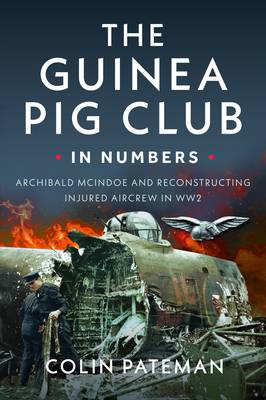
The Guinea Pig Club in Numbers
Archibald McIndoe and Reconstructing Injured Aircrew in Ww2
Colin Pateman
Paperback | Engels
€ 20,95
+ 41 punten
Omschrijving
It was over a Sunday afternoon glass of sherry on 20 July 1941, that a group of airmen, all recovering from recent surgery, agreed they should form a drinking club. It was decided that membership would be open to any member of Allied aircrew who had undergone at least two operations for burns or other disfigurements at the Queen Victoria Hospital in East Grinstead. So was born the remarkable Guinea Pig Club.
The club's name, chosen humorously by its members who had suffered serious injuries in aircraft crashes or cockpit fires, reflected their status as 'guinea pigs' in pioneering reconstructive surgery led by the New Zealand-born plastic surgeon Sir Archibald McIndoe. McIndoe revolutionized plastic and reconstructive surgery, developing new techniques for skin grafting and rehabilitation. He also emphasized not only physical recovery but also the emotional and social reintegration of his patients. Unlike the rigid hospital norms of the time, McIndoe encouraged his men to wear civilian clothes, visit the local pub, and mix with townspeople, fostering confidence and normality. The community of East Grinstead, which came to be known as 'the town that didn't stare', became an integral part of their recovery story.
Though the Guinea Pig Club began as a social drinking group, it evolved into a lifelong brotherhood that offered mutual support, camaraderie, and advocacy for burn victims. By the end of the war, it had over 600 members from various Allied nations. The club continued to meet annually for decades, celebrating survival, friendship, and medical progress. Its legacy endures as a symbol of resilience, medical innovation, and the human capacity to overcome extreme trauma through courage and solidarity.
The Guinea Pig Club In Numbers is illuminated by the individual stories of its members and the caring staff at the Queen Victoria Hospital. The details are fascinating, but the numbers reveal remarkable stories of resilience during the Second World War and beyond.
The club's name, chosen humorously by its members who had suffered serious injuries in aircraft crashes or cockpit fires, reflected their status as 'guinea pigs' in pioneering reconstructive surgery led by the New Zealand-born plastic surgeon Sir Archibald McIndoe. McIndoe revolutionized plastic and reconstructive surgery, developing new techniques for skin grafting and rehabilitation. He also emphasized not only physical recovery but also the emotional and social reintegration of his patients. Unlike the rigid hospital norms of the time, McIndoe encouraged his men to wear civilian clothes, visit the local pub, and mix with townspeople, fostering confidence and normality. The community of East Grinstead, which came to be known as 'the town that didn't stare', became an integral part of their recovery story.
Though the Guinea Pig Club began as a social drinking group, it evolved into a lifelong brotherhood that offered mutual support, camaraderie, and advocacy for burn victims. By the end of the war, it had over 600 members from various Allied nations. The club continued to meet annually for decades, celebrating survival, friendship, and medical progress. Its legacy endures as a symbol of resilience, medical innovation, and the human capacity to overcome extreme trauma through courage and solidarity.
The Guinea Pig Club In Numbers is illuminated by the individual stories of its members and the caring staff at the Queen Victoria Hospital. The details are fascinating, but the numbers reveal remarkable stories of resilience during the Second World War and beyond.
Specificaties
Betrokkenen
- Auteur(s):
- Uitgeverij:
Inhoud
- Aantal bladzijden:
- 192
- Taal:
- Engels
Eigenschappen
- Productcode (EAN):
- 9781036190187
- Verschijningsdatum:
- 30/10/2026
- Uitvoering:
- Paperback
- Formaat:
- Trade paperback (VS)
- Afmetingen:
- 159 mm x 235 mm


Alleen bij Standaard Boekhandel
+ 41 punten op je klantenkaart van Standaard Boekhandel
Cadeau

AANGERADEN


Beoordelingen
We publiceren alleen reviews die voldoen aan de voorwaarden voor reviews. Bekijk onze voorwaarden voor reviews.