


- Afhalen na 1 uur in een winkel met voorraad
- Gratis thuislevering in België vanaf € 30
- Ruim aanbod met 7 miljoen producten
- Afhalen na 1 uur in een winkel met voorraad
- Gratis thuislevering in België vanaf € 30
- Ruim aanbod met 7 miljoen producten





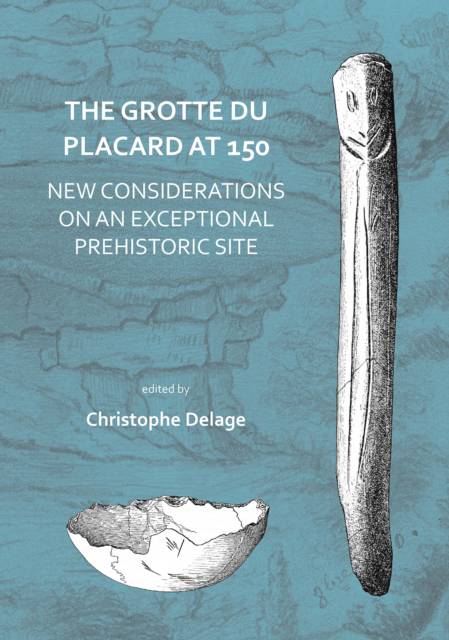
The Grotte Du Placard at 150
New Considerations on an Exceptional Prehistoric Site
Christophe Delage
Paperback | Engels
€ 47,45
Omschrijving
The prehistoric site of Le Placard, located in Southwest France, was discovered and first explored 150 years ago at a time when prehistory was just emerging as a scientific discipline. Through this century and a half of explorations this site has been involved in numerous debates of prehistoric research; it has also yielded an extraordinary amount and diverse range of archaeological materials (i.e. lithics, fauna, osseous industry, body adornments, pigments, human remains, mobiliary and parietal art, hearths, etc.). Yet this site appears now poorly valued due to the devastating 19th-century excavation techniques that almost completely emptied the cavity. Subsequently it is surprisingly ill-known. This 150-year milestone gives us an opportunity to look back at this exceptional site and its associated materials in order to demonstrate that it still holds a unique potential in the debates about these Late Pleistocene hunting and gathering societies. The various chapters cover multiple aspects of the history of research and of the collections, present detailed studies on the material culture (osseous industry, spearthrowers, musical instruments), and address specific issues related to parietal art, social networks and the political nature of these prehistoric communities. The best hypothesis and explanation to account for this exceptional diversity of remains would argue that Le Placard has been a village occupied by various groups of complex (transegalitarian) hunter-gatherers.
Specificaties
Betrokkenen
- Auteur(s):
- Uitgeverij:
Inhoud
- Aantal bladzijden:
- 210
- Taal:
- Engels
Eigenschappen
- Productcode (EAN):
- 9781784919603
- Verschijningsdatum:
- 30/09/2018
- Uitvoering:
- Paperback
- Formaat:
- Trade paperback (VS)
- Afmetingen:
- 203 mm x 290 mm
- Gewicht:
- 703 g


Alleen bij Standaard Boekhandel
Cadeau

AANGERADEN


Beoordelingen
We publiceren alleen reviews die voldoen aan de voorwaarden voor reviews. Bekijk onze voorwaarden voor reviews.