


- Afhalen na 1 uur in een winkel met voorraad
- Gratis thuislevering in België vanaf € 30
- Ruim aanbod met 7 miljoen producten
- Afhalen na 1 uur in een winkel met voorraad
- Gratis thuislevering in België vanaf € 30
- Ruim aanbod met 7 miljoen producten




Omschrijving
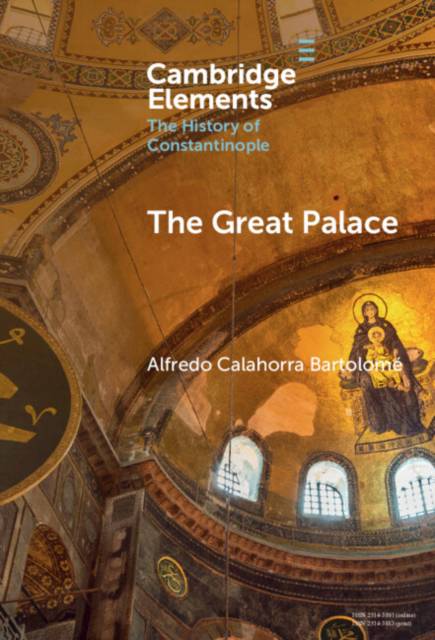
The Great Palace of Constantinople was the heart of Byzantium for almost a thousand years, serving as both a political and architectural model for Christendom and the Islamic world. Despite its historical significance, reconstructing its layout remains challenging due to the scarce amount of archaeological evidence. This Element synthesises the historical and topographical evolution of the palace, examining its architectural typologies and the role of ritual and artistic objects in representing imperial power. It also addresses key historiographical issues, such as the identification and dating of the Peristyle of the Mosaics, as well as its role in imperial ceremonies. The research is based on textual sources, archaeology, and graphic documentation, culminating in a virtual reconstruction through 3D imaging. By integrating these methodologies, this Element aims to offer a comprehensive understanding of the Great Palace, its influence, and its role as a central stage for Byzantine ceremonial and ideological expression.
Specificaties
Betrokkenen
- Auteur(s):
- Uitgeverij:
Inhoud
- Aantal bladzijden:
- 108
- Taal:
- Engels
- Reeks:
Eigenschappen
- Productcode (EAN):
- 9781009675529
- Verschijningsdatum:
- 26/02/2026
- Uitvoering:
- Hardcover
- Formaat:
- Genaaid
- Afmetingen:
- 152 mm x 229 mm
- Gewicht:
- 317 g


Alleen bij Standaard Boekhandel
+ 225 punten op je klantenkaart van Standaard Boekhandel

Beoordelingen
We publiceren alleen reviews die voldoen aan de voorwaarden voor reviews. Bekijk onze voorwaarden voor reviews.