


- Afhalen na 1 uur in een winkel met voorraad
- Gratis thuislevering in België vanaf € 30
- Ruim aanbod met 7 miljoen producten
- Afhalen na 1 uur in een winkel met voorraad
- Gratis thuislevering in België vanaf € 30
- Ruim aanbod met 7 miljoen producten





Omschrijving
“And I like large parties. They’re so intimate. At small parties there isn’t any privacy.”
Scott Fitzgerald is known as the definitive author of the Jazz Age – the glittering, alcohol-fuelled, and outrageously freewheeling era of post-war euphoria. The Great Gatsby in turn is seen as his magnum opus, as the peak of his artistry – a classic depiction of the era, and of the human yearning for things just out of reach, of the powers of love and money.
The novel depicts the journey of Nick Carraway, a young and well-educated American from the mid-west, as he enters the east-coast high society and its world of money and glitz in search of love and employment. His journey introduces him to the mysterious millionaire Jay Gatsby and a host of curious characters circling the attracting light of Gatsby and his wealth.
Through the novel Fitzgerald touches on topics like wealth, class, the American dream, and gender. These topics are woven into a universally appealing story that has become considered a literary masterpiece.
Our section on F. Scott Fitzgerald and his life includes his own essay ‘Echoes of the Jazz Age’, written in 1931 to analyze the roaring twenties just as they had ended.
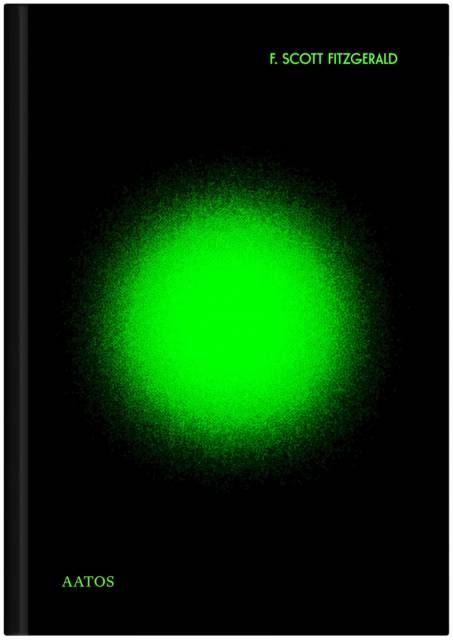
The book comes in 137x200mm format with hard cover, black coloured paper edges and brilliant green details, designed by Tony Eräpuro in Helsinki.
Scott Fitzgerald is known as the definitive author of the Jazz Age – the glittering, alcohol-fuelled, and outrageously freewheeling era of post-war euphoria. The Great Gatsby in turn is seen as his magnum opus, as the peak of his artistry – a classic depiction of the era, and of the human yearning for things just out of reach, of the powers of love and money.
The novel depicts the journey of Nick Carraway, a young and well-educated American from the mid-west, as he enters the east-coast high society and its world of money and glitz in search of love and employment. His journey introduces him to the mysterious millionaire Jay Gatsby and a host of curious characters circling the attracting light of Gatsby and his wealth.
Through the novel Fitzgerald touches on topics like wealth, class, the American dream, and gender. These topics are woven into a universally appealing story that has become considered a literary masterpiece.
Our section on F. Scott Fitzgerald and his life includes his own essay ‘Echoes of the Jazz Age’, written in 1931 to analyze the roaring twenties just as they had ended.
The book comes in 137x200mm format with hard cover, black coloured paper edges and brilliant green details, designed by Tony Eräpuro in Helsinki.
Specificaties
Betrokkenen
- Auteur(s):
- Uitgeverij:
Inhoud
- Aantal bladzijden:
- 252
- Taal:
- Engels
Eigenschappen
- Productcode (EAN):
- 9789526538570
- Verschijningsdatum:
- 12/12/2024
- Uitvoering:
- Hardcover
- Afmetingen:
- 207 mm x 145 mm
- Gewicht:
- 486 g



Alleen bij Standaard Boekhandel
+ 59 punten op je klantenkaart van Standaard Boekhandel

Beoordelingen
We publiceren alleen reviews die voldoen aan de voorwaarden voor reviews. Bekijk onze voorwaarden voor reviews.