


- Afhalen na 1 uur in een winkel met voorraad
- Gratis thuislevering in België vanaf € 30
- Ruim aanbod met 7 miljoen producten
- Afhalen na 1 uur in een winkel met voorraad
- Gratis thuislevering in België vanaf € 30
- Ruim aanbod met 7 miljoen producten





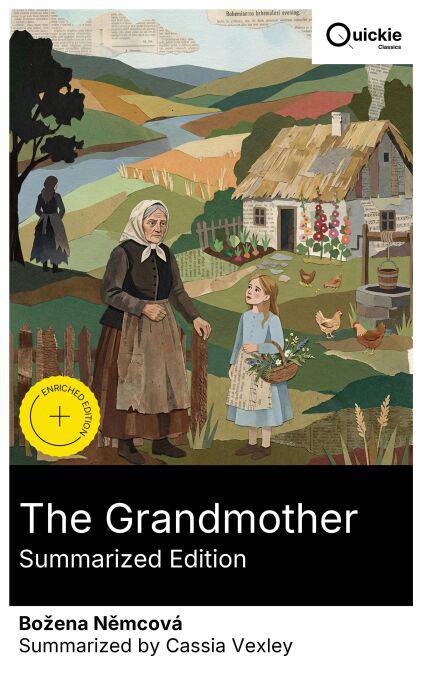
The Grandmother (Summarized Edition) E-BOOK
Enriched edition. A granddaughter's journey through 19th-century Bohemia: Czech rural life, family and tradition, realism meets romanticism, national awakening
Božena Němcová
E-book | Engels
€ 1,99
+ 1 punten
Omschrijving
The Grandmother (Babička, 1855) unfolds in the Ratibořice valley, where the eponymous matriarch anchors a cottage world of seasonal labor, folktale wisdom, and communal rites. Němcová interweaves pastoral realism with gentle idealization, setting vivid ethnographic scenes—feasts, spinning evenings, harvest customs—against darker counterpoints such as Viktorka's ballad-like tragedy. Her supple, idiomatic Czech captures rural cadences while maintaining classical narrative poise, placing the novel at the center of the Czech National Revival's effort to dignify vernacular memory. Němcová drew this domestic cosmos from childhood in and around Česká Skalice and from the moral presence of her own grandmother, refracted through poverty, an unhappy marriage to the official Josef Němec, and pressures on Czech patriots under Habsburg rule. As a collector of folk songs and tales across Bohemia and Slovakia, she honed an ethnographer's ear; as a committed revivalist, she sought a form where women's labor, oral tradition, and national feeling could converge. Readers of Central European classics, life-writing, and folklore studies will find The Grandmother both tender and exacting: a touchstone of sentimental realism that still probes loss, class, and gendered authority. It rewards anyone curious how a modern literature can arise from a single hearth and a community's remembered speech.
Quickie Classics summarizes timeless works with precision, preserving the author's voice and keeping the prose clear, fast, and readable—distilled, never diluted. Enriched Edition extras: Introduction · Synopsis · Historical Context · Brief Analysis · 4 Reflection Q&As · Editorial Footnotes.
Quickie Classics summarizes timeless works with precision, preserving the author's voice and keeping the prose clear, fast, and readable—distilled, never diluted. Enriched Edition extras: Introduction · Synopsis · Historical Context · Brief Analysis · 4 Reflection Q&As · Editorial Footnotes.
Specificaties
Betrokkenen
- Auteur(s):
- Vertaler(s):
- Uitgeverij:
Inhoud
- Aantal bladzijden:
- 132
- Taal:
- Engels
Eigenschappen
- Productcode (EAN):
- 8596547879503
- Verschijningsdatum:
- 9/01/2026
- Uitvoering:
- E-book
- Beveiligd met:
- Digital watermarking
- Formaat:
- ePub


Alleen bij Standaard Boekhandel
+ 1 punten op je klantenkaart van Standaard Boekhandel
Cadeau

AANGERADEN


Beoordelingen
We publiceren alleen reviews die voldoen aan de voorwaarden voor reviews. Bekijk onze voorwaarden voor reviews.