


- Afhalen na 1 uur in een winkel met voorraad
- Gratis thuislevering in België vanaf € 30
- Ruim aanbod met 7 miljoen producten
- Afhalen na 1 uur in een winkel met voorraad
- Gratis thuislevering in België vanaf € 30
- Ruim aanbod met 7 miljoen producten





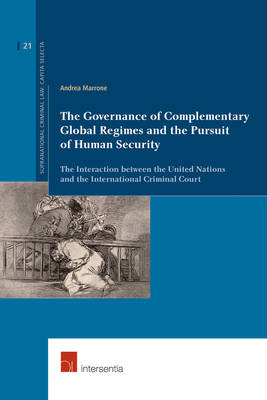
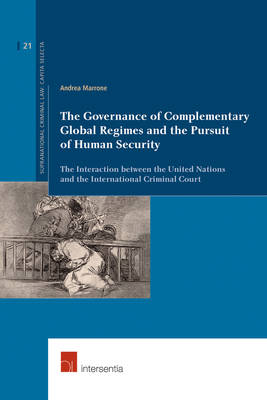
The Governance of Complementary Global Regimes and the Pursuit of Human Security
The Interaction Between the United Nations and the International Criminal Court Volume 21
Andrea Marrone
€ 114,00
+ 228 punten
Omschrijving
This book offers an overview of the challenges in the emerging regime of international criminal justice as a tool of sustainable peace. It illustrates the impact of the regime on international law and international relations, focusing on the obstacles to and concerns of its governance in the context of the maintenance and restoration of international peace and security.The author advocates for an appropriate interaction strategy between the United Nations and the Rome Statute institutions as a matter of international mutual concern and for the sake of human security. In multiple and inter-linked country situations the failure of strategies to prevent mass atrocity crimes have severely compromised the safety of civilians, including their individual fundamental rights. In several countries - such as in Libya, Syria, Sudan, Democratic Republic of Congo, Uganda, Kenya, Central African Republic, Ivory Coast and Mali - civilians have severely suffered the consequences of such failure. Furthermore, the right of humanitarian intervention that it is sometimes claimed the international community has is now challenged and qualified by the responsibility to protect civilians in situations of mass atrocity crimes. Such an international norm represents unfinished business in global politics and is considered by many to be far from capable of preserving the rule of international law. The preservation of the rule of law requires discussions and the advocacy of global values in international relations, such as multilateralism, collective responsibility, global solidarity and mutual accountability.
Specificaties
Betrokkenen
- Auteur(s):
- Uitgeverij:
Inhoud
- Aantal bladzijden:
- 438
- Taal:
- Engels
- Reeks:
- Reeksnummer:
- nr. 21
Eigenschappen
- Productcode (EAN):
- 9781780684024
- Verschijningsdatum:
- 21/09/2016
- Uitvoering:
- Paperback
- Formaat:
- Trade paperback (VS)
- Afmetingen:
- 160 mm x 240 mm
- Gewicht:
- 834 g


Alleen bij Standaard Boekhandel
+ 228 punten op je klantenkaart van Standaard Boekhandel
Cadeau

AANGERADEN


Beoordelingen
We publiceren alleen reviews die voldoen aan de voorwaarden voor reviews. Bekijk onze voorwaarden voor reviews.