


- Afhalen na 1 uur in een winkel met voorraad
- Gratis thuislevering in België vanaf € 30
- Ruim aanbod met 7 miljoen producten
- Afhalen na 1 uur in een winkel met voorraad
- Gratis thuislevering in België vanaf € 30
- Ruim aanbod met 7 miljoen producten





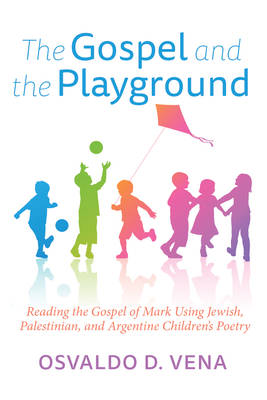
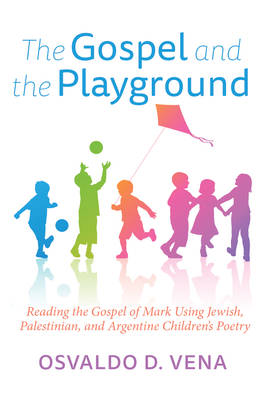
The Gospel and the Playground
Reading the Gospel of Mark Using Jewish, Palestinian, and Argentine Children's Poetry
Osvaldo D Vena
Hardcover | Engels
€ 41,95
+ 83 punten
Uitvoering
Omschrijving
In this book Osvaldo D. Vena wants to bring into dialogue two communities. One is the hypothetical community of Mark, which can be reconstructed behind the Gospel. It is a community that is locked in place and time, the first-century Mediterranean world. It is made up of adults and children in a hierarchical relationship that places the former over the latter, speaking for them rather than allowing them to speak for themselves. The other is a contemporary, real community, whose members are children living in Israel/Palestine and in Argentina. Each community has produced a text that is open to interpretation. Mark will bring his narrative, his prose, the children their poetry. Therefore, this book is an intertextual exercise that uses two different types of text. This community has also produced a text--in this case poetry--that is also open to new and numerous interpretations. The author has termed this "the community of the playground."
Specificaties
Betrokkenen
- Auteur(s):
- Uitgeverij:
Inhoud
- Aantal bladzijden:
- 68
- Taal:
- Engels
Eigenschappen
- Productcode (EAN):
- 9798385225538
- Verschijningsdatum:
- 17/10/2025
- Uitvoering:
- Hardcover
- Formaat:
- Genaaid
- Afmetingen:
- 140 mm x 216 mm
- Gewicht:
- 231 g


Alleen bij Standaard Boekhandel
+ 83 punten op je klantenkaart van Standaard Boekhandel
Cadeau

AANGERADEN


Beoordelingen
We publiceren alleen reviews die voldoen aan de voorwaarden voor reviews. Bekijk onze voorwaarden voor reviews.