


- Afhalen na 1 uur in een winkel met voorraad
- Gratis thuislevering in België vanaf € 30
- Ruim aanbod met 7 miljoen producten
- Afhalen na 1 uur in een winkel met voorraad
- Gratis thuislevering in België vanaf € 30
- Ruim aanbod met 7 miljoen producten





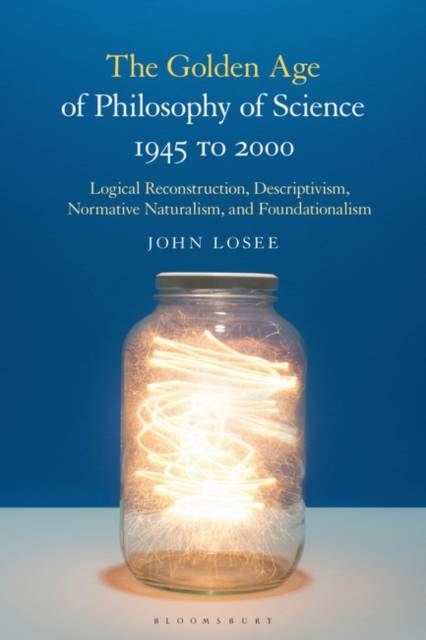
The Golden Age of Philosophy of Science 1945 to 2000
Logical Reconstructionism, Descriptivism, Normative Naturalism, and Foundationalism
John Losee
Hardcover | Engels
€ 271,45
+ 542 punten
Uitvoering
Omschrijving
This book offers the reader a guide to the major philosophical approaches to science since World War Two. Considering the bases, arguments and conclusions of the four main movements - Logical Reconstructionism, Descriptivism, Normative Naturalism and Foundationalism - John Losee explores how philosophy has both shaped and expanded our understanding of science.
The volume features major figures of twentieth century science, and engages with the work of previous philosophers of science, including Norman Campbell, Rudolf Carnap, Ernest Nagel, Karl Popper, Richard Dawkins, and John Worrall. In particular, The Golden Age of Philosophy of Science, 1945 to 2000 aims to answer the following questions: How should competing philosophies of science be evaluated? Should philosophy of science be a prescriptive discipline? Can philosophy of science achieve normative status without designating trans-historical evaluative principles? And finally, how can understanding the history of science aid us in analyzing the philosophy of science? In answering these questions, this book shows us why we understand science the way we do. The Golden Age of Philosophy of Science 1945 to 2000 is essential reading for students and researchers working in the history and philosophy of science.Specificaties
Betrokkenen
- Auteur(s):
- Uitgeverij:
Inhoud
- Aantal bladzijden:
- 328
- Taal:
- Engels
Eigenschappen
- Productcode (EAN):
- 9781350071513
- Verschijningsdatum:
- 27/12/2018
- Uitvoering:
- Hardcover
- Formaat:
- Genaaid
- Afmetingen:
- 163 mm x 236 mm
- Gewicht:
- 589 g


Alleen bij Standaard Boekhandel
+ 542 punten op je klantenkaart van Standaard Boekhandel
AANGERADEN


Beoordelingen
We publiceren alleen reviews die voldoen aan de voorwaarden voor reviews. Bekijk onze voorwaarden voor reviews.