


- Afhalen na 1 uur in een winkel met voorraad
- Gratis thuislevering in België vanaf € 30
- Ruim aanbod met 7 miljoen producten
- Afhalen na 1 uur in een winkel met voorraad
- Gratis thuislevering in België vanaf € 30
- Ruim aanbod met 7 miljoen producten





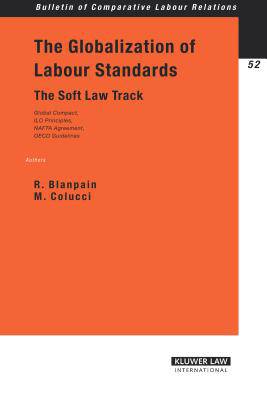
The Globalization of Labour Standards
The Soft Law Track--Global Compact, ILO Principles, NAFTA Agreement, OECD Guidelines
Blanpain
€ 113,94
+ 227 punten
Omschrijving
Do core labour standards exist in today¿s global economy? If so, what are they? And most importantly, how effective are they? In this book two outstanding labour law scholars answer these questions in a definitive manner. In deep and convincing detail they demonstrate that, although insufficiently legally binding instruments governing employment and labour exist beyond the national level, a significant body of international ¿soft law¿ has developed that does in fact carry great weight. Blanpain and Colucci identify four major sources of this soft law - the UN Global Compact of 1999, the ILO Tripartite Declaration of Principles, the North American Agreement on Labor Cooperation, and the OECD Guidelines for Multinational Enterprises - and show how the principles these instruments enunciate act as a countervailing power to the international economic decision-making of multinational corporations. The book analyses the entire spectrum of fact and implication encompassed in these influential sources, with close attention to such subject areas as the following: context and drafting history of the instruments; the respective roles of enterprises, governments, employers¿ organisations and trade unions; detailed analysis of specific core standards; the impact of economic zones and industrial sectors; committees, arbitral panels and other procedural details; issues involving reporting, complaints and disputes; and, enterprise responsibilities. The authors cite relevant cases and highlight emerging trends in this important area of labour law. Annexes reprint all four of the instruments.
Specificaties
Betrokkenen
- Auteur(s):
- Uitgeverij:
Inhoud
- Aantal bladzijden:
- 168
- Taal:
- Engels
- Reeks:
Eigenschappen
- Productcode (EAN):
- 9789041123039
- Verschijningsdatum:
- 1/07/2004
- Uitvoering:
- Paperback
- Formaat:
- Trade paperback (VS)
- Afmetingen:
- 162 mm x 242 mm
- Gewicht:
- 294 g


Alleen bij Standaard Boekhandel
+ 227 punten op je klantenkaart van Standaard Boekhandel
Cadeau

AANGERADEN


Beoordelingen
We publiceren alleen reviews die voldoen aan de voorwaarden voor reviews. Bekijk onze voorwaarden voor reviews.