


- Afhalen na 1 uur in een winkel met voorraad
- Gratis thuislevering in België vanaf € 30
- Ruim aanbod met 7 miljoen producten
- Afhalen na 1 uur in een winkel met voorraad
- Gratis thuislevering in België vanaf € 30
- Ruim aanbod met 7 miljoen producten





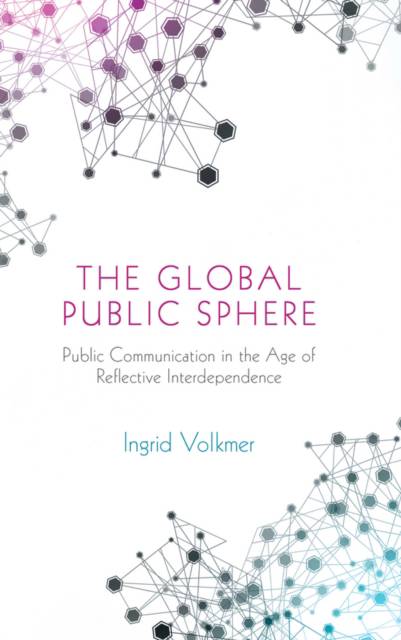
The Global Public Sphere
Public Communication in the Age of Reflective Interdependence
Ingrid Volkmer
Hardcover | Engels
€ 111,45
+ 222 punten
Omschrijving
Over the last several years, the debate about publics seems to have newly emerged. This debate critically reflects the Habermasian ideal of a (national) public sphere in a transnational context. However, it seems that the issue of a reconstruction of a global public sphere is more complex. In this brilliant and provocative book, Ingrid Volkmer argues that a reflective approach of globalization is required in order to identify and deconstruct key strata of deliberate public discourse in supra- and subnational societal formations. This construction helps to understand the new processes of legitimacy at the beginning of the 21st century in which the traditional conception of a 'public' and its role as a legitimizing force are being challenged and transformed. The book unfolds this key phenomenon of global deliberate interconnectedness as a discursive and negotiated dimension within 'reflective' globalization, i.e. continuously constituting, maintaining and refining the 'life' of the global public and conceptualizes a global public sphere.
Offering insightful case studies to illustrate this new theory of the global public sphere, the book will be essential reading for students and scholars of media and communication studies, and social and political theory.
Offering insightful case studies to illustrate this new theory of the global public sphere, the book will be essential reading for students and scholars of media and communication studies, and social and political theory.
Specificaties
Betrokkenen
- Auteur(s):
- Uitgeverij:
Inhoud
- Aantal bladzijden:
- 224
- Taal:
- Engels
Eigenschappen
- Productcode (EAN):
- 9780745639574
- Verschijningsdatum:
- 4/08/2014
- Uitvoering:
- Hardcover
- Formaat:
- Genaaid
- Afmetingen:
- 163 mm x 234 mm
- Gewicht:
- 566 g



Alleen bij Standaard Boekhandel
+ 222 punten op je klantenkaart van Standaard Boekhandel
Cadeau

AANGERADEN


Beoordelingen
We publiceren alleen reviews die voldoen aan de voorwaarden voor reviews. Bekijk onze voorwaarden voor reviews.