


- Afhalen na 1 uur in een winkel met voorraad
- Gratis thuislevering in België vanaf € 30
- Ruim aanbod met 7 miljoen producten
- Afhalen na 1 uur in een winkel met voorraad
- Gratis thuislevering in België vanaf € 30
- Ruim aanbod met 7 miljoen producten





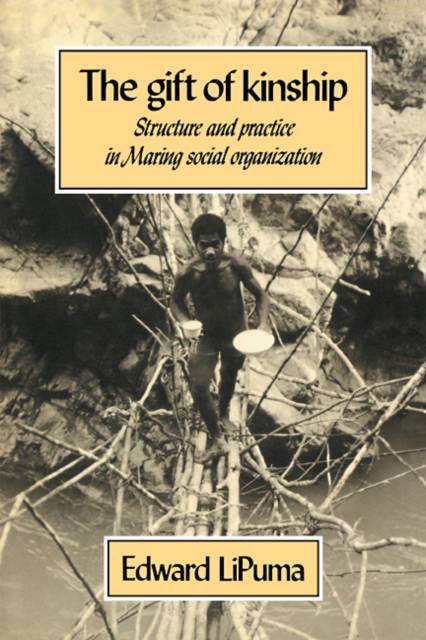
The Gift of Kinship
Structure and Practice in Maring Social Organization
Edward Lipuma
Paperback | Engels
€ 67,95
+ 135 punten
Omschrijving
Although the societies of the New Guinea Highlands have been extensively studied by anthropologists since the Second World War, it is generally acknowledged that a comprehensive explanation of their social structure is yet to emerge. In this book, Edward LiPuma presents an ethnography of Maring social organization in order to develop a generative theory of Highland societies that takes account of both social structure and its reproduction in practice. Arguing for the inseparability of the symbolic and the material, norm and action, and structure and practice, the study has three objectives. The first is to demonstrate how cultural categories fashion generative schemes for practice, and how practice in turn reproduces social groups and the concepts they embody. The second is to develop through ethnography an analysis of the relationship between structure and practice, while the third is to identify some of the ways in which the situation of the ethnographer informs the production of ethnography and the making of theory.
Specificaties
Betrokkenen
- Auteur(s):
- Uitgeverij:
Inhoud
- Aantal bladzijden:
- 252
- Taal:
- Engels
Eigenschappen
- Productcode (EAN):
- 9780521106191
- Verschijningsdatum:
- 2/04/2009
- Uitvoering:
- Paperback
- Formaat:
- Trade paperback (VS)
- Afmetingen:
- 152 mm x 229 mm
- Gewicht:
- 371 g


Alleen bij Standaard Boekhandel
+ 135 punten op je klantenkaart van Standaard Boekhandel
Cadeau

AANGERADEN


Beoordelingen
We publiceren alleen reviews die voldoen aan de voorwaarden voor reviews. Bekijk onze voorwaarden voor reviews.