


- Afhalen na 1 uur in een winkel met voorraad
- Gratis thuislevering in België vanaf € 30
- Ruim aanbod met 7 miljoen producten
- Afhalen na 1 uur in een winkel met voorraad
- Gratis thuislevering in België vanaf € 30
- Ruim aanbod met 7 miljoen producten




€ 23,95
+ 47 punten
Uitvoering
Eenvoudig bestellen
Veilig betalen


Gratis thuislevering vanaf € 30 (via bpost)
Gratis levering in je Standaard Boekhandel
Omschrijving
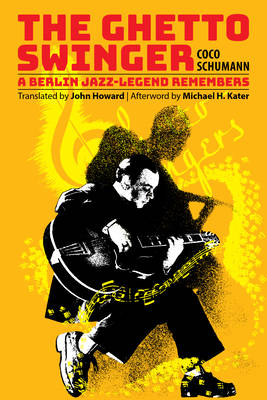
Jazz in Nazi-era and postwar Germany, as lived by a Jewish prodigy who survived the horrors of Theresienstadt and Auschwitz.
"Coco, it's not important what you play. It's important how you play it," said Louis Armstrong to jazz and swing guitarist Coco Schumann during a break between sessions. Recalling this episode Schumann reminds readers that even in the midst of real-world nightmares, music is alive and musicians experience this essential freedom and hope, which they can, in turn, give to their audiences. Throughout his remarkable life, Coco Schumann (b. 1924) would accumulate accolades, including the Order of Merit from the Federal Republic of Germany in 1989 and the prestigious Ehrenpreise Lifetime Achievement Award in 2015, and play with jazz greats Toots Thielemans, Dizzy Gillespie, Louis Armstrong, Ella Fitzgerald, and others. But few knew he relied on composing music and performing for live audiences to ease the burden of his wartime memories.
After forty years of silence Schumann's memoir opened a rare window into the previously unknown life of one of Germany's most renowned musicians, who was a member of the vibrant and illegal Berlin club scene, a part of the cultural revival of postwar Berlin, and a survivor of Theresienstadt (Terezin) and the horrors of Auschwitz.
Shortlisted for the 2017 A.R.S.C. Awards for Excellence in Historical Research in Jazz.
Includes over 50 historical documents and rare photographs.
"Coco, it's not important what you play. It's important how you play it," said Louis Armstrong to jazz and swing guitarist Coco Schumann during a break between sessions. Recalling this episode Schumann reminds readers that even in the midst of real-world nightmares, music is alive and musicians experience this essential freedom and hope, which they can, in turn, give to their audiences. Throughout his remarkable life, Coco Schumann (b. 1924) would accumulate accolades, including the Order of Merit from the Federal Republic of Germany in 1989 and the prestigious Ehrenpreise Lifetime Achievement Award in 2015, and play with jazz greats Toots Thielemans, Dizzy Gillespie, Louis Armstrong, Ella Fitzgerald, and others. But few knew he relied on composing music and performing for live audiences to ease the burden of his wartime memories.
After forty years of silence Schumann's memoir opened a rare window into the previously unknown life of one of Germany's most renowned musicians, who was a member of the vibrant and illegal Berlin club scene, a part of the cultural revival of postwar Berlin, and a survivor of Theresienstadt (Terezin) and the horrors of Auschwitz.
Shortlisted for the 2017 A.R.S.C. Awards for Excellence in Historical Research in Jazz.
Includes over 50 historical documents and rare photographs.
Specificaties
Betrokkenen
- Auteur(s):
- Vertaler(s):
- Uitgeverij:
Inhoud
- Aantal bladzijden:
- 192
- Taal:
- Engels
Eigenschappen
- Productcode (EAN):
- 9780998777061
- Verschijningsdatum:
- 03/04/2018
- Uitvoering:
- Paperback
- Formaat:
- Trade paperback (VS)
- Afmetingen:
- 150 mm x 226 mm
- Gewicht:
- 226 g


Alleen bij Standaard Boekhandel
+ 47 punten op je klantenkaart van Standaard Boekhandel
CADEAU

AANGERADEN


Beoordelingen
We publiceren alleen reviews die voldoen aan de voorwaarden voor reviews. Bekijk onze voorwaarden voor reviews.