


- Afhalen na 1 uur in een winkel met voorraad
- Gratis thuislevering in België vanaf € 30
- Ruim aanbod met 7 miljoen producten
- Afhalen na 1 uur in een winkel met voorraad
- Gratis thuislevering in België vanaf € 30
- Ruim aanbod met 7 miljoen producten





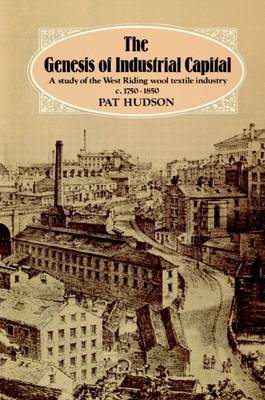
The Genesis of Industrial Capital
A Study of West Riding Wool Textile Industry, C.1750-1850
Pat Hudson
Paperback | Engels
€ 100,95
+ 201 punten
Omschrijving
This book analyses the sources of finance used in the Yorkshire wool textile sector during a period of rapid expansion, considerable technical change and the gradual transformation from domestic and workshop production to factory industry. Although there has been much recent debate about capital investment proportions and their sources nationally, there is no other study of a region or section capable of testing various hypotheses current in the general literature of the British 'industrial revolution'. How was capital amassed in proto-industry? How important were merchants in building factories? What role did landowners and the local banking sector? What influence did trade credit and fluctuations in trade credit have on the expansion of productive enterprise? How important was reinvestment and what determined both profitability and the extent to which it was ploughed back into business? The answers to these questions have value for all students of the industrialisation process, whilst the detailed material on Yorkshire is of interest for local study and provides a model of the questions which could be asked in other similar regional studies of the future.
Specificaties
Betrokkenen
- Auteur(s):
- Uitgeverij:
Inhoud
- Aantal bladzijden:
- 368
- Taal:
- Engels
Eigenschappen
- Productcode (EAN):
- 9780521890892
- Verschijningsdatum:
- 11/04/2002
- Uitvoering:
- Paperback
- Formaat:
- Trade paperback (VS)
- Afmetingen:
- 157 mm x 231 mm
- Gewicht:
- 589 g


Alleen bij Standaard Boekhandel
+ 201 punten op je klantenkaart van Standaard Boekhandel
Cadeau

AANGERADEN


Beoordelingen
We publiceren alleen reviews die voldoen aan de voorwaarden voor reviews. Bekijk onze voorwaarden voor reviews.