



Bedankt voor het vertrouwen het afgelopen jaar! Om jou te bedanken bieden we GRATIS verzending (in België) aan op alles gedurende de hele maand januari.
- Afhalen na 1 uur in een winkel met voorraad
- In januari gratis thuislevering in België
- Ruim aanbod met 7 miljoen producten
Bedankt voor het vertrouwen het afgelopen jaar! Om jou te bedanken bieden we GRATIS verzending (in België) aan op alles gedurende de hele maand januari.
- Afhalen na 1 uur in een winkel met voorraad
- In januari gratis thuislevering in België
- Ruim aanbod met 7 miljoen producten





Omschrijving
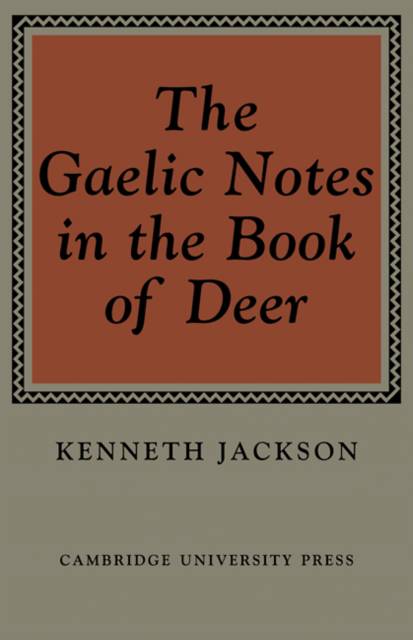
The Book of Deer, 43 folios of manuscript, containing parts of the Gospels and the Apostles' Creed, is one of the treasures of the Cambridge University Library. The Book is important not so much for its primary contents as for the notes in Gaelic which have been added to it in some of the available blank spaces. These notes record the foundation 'myth' of the monastery of Deer in north-east Aberdeenshire, and formal recordings of various grants of lands to the monastery. The language in which the notes are written is the form of Gaelic spoken in Buchan during the earlier part of the twelfth century, which means that this manuscript predates the next earliest surviving Scots Gaelic documents by almost three centuries. Professor Jackson presents a diplomatic text of the notes, based on a careful study of the original manuscript, together with an edited text, a translation, discussion, notes and a glossary.
Specificaties
Betrokkenen
- Auteur(s):
- Uitgeverij:
Inhoud
- Aantal bladzijden:
- 184
- Taal:
- Engels
Eigenschappen
- Productcode (EAN):
- 9780521076753
- Verschijningsdatum:
- 11/09/2008
- Uitvoering:
- Paperback
- Formaat:
- Trade paperback (VS)
- Afmetingen:
- 140 mm x 216 mm
- Gewicht:
- 240 g


Alleen bij Standaard Boekhandel
+ 129 punten op je klantenkaart van Standaard Boekhandel
SOLDEN


Beoordelingen
We publiceren alleen reviews die voldoen aan de voorwaarden voor reviews. Bekijk onze voorwaarden voor reviews.