


- Afhalen na 1 uur in een winkel met voorraad
- Gratis thuislevering in België vanaf € 30
- Ruim aanbod met 7 miljoen producten
- Afhalen na 1 uur in een winkel met voorraad
- Gratis thuislevering in België vanaf € 30
- Ruim aanbod met 7 miljoen producten





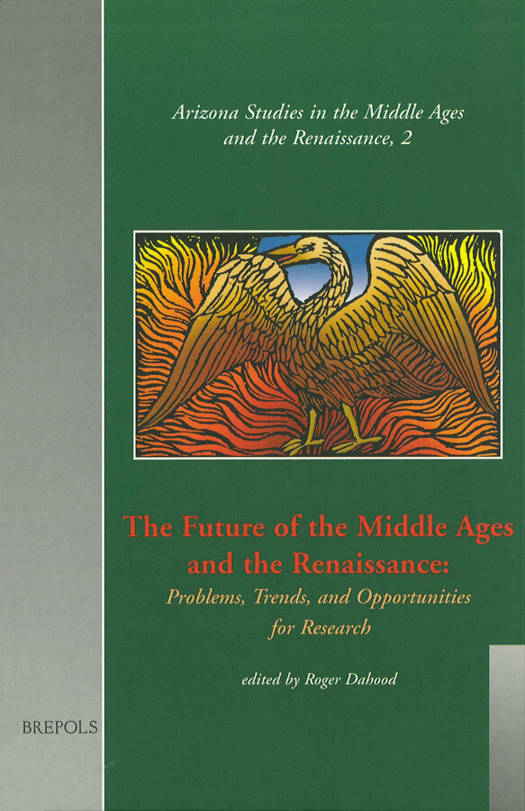
The Future of the Middle Ages and the Renaissance
Problems, Trends, and Opportunities for Research
Roger Dahood
€ 31,80
+ 63 punten
Omschrijving
This volume, containing a selection of essays from ACMRS's 1996 conference, reflects a broad range of interests in medieval and Renaissance studies. Although most of the eleven essays address western European topics, one essay deals with Byzantine political and theological histroy, and one touches on Arabic poetry in medieval Sicily. The chronological range is also broad, extending from the seventh to the twentieth century and including topics from an early Byzantine polemicist to the recent growing interest in medievalism, and from critical readings of early texts to implications of computer technology for future manuscript study. In some significant ways the volume continues earlier discussions of the state of the profession, such as those in William D. Paden (ed.), The Future of the Middle Ages, and John Van Engen (ed.), The Past and Future of Medieval Studies. More generally, this second volume in the ASMAR series extends the theme of the first, Reinventing the Past, and makes fresh contributions to the scholarship on a number of problems. If the current volume provides a reliable gauge for the future of medieval and Renaissance studies, we are on the verge of new beginnings, increasingly outward-looking, reexamining and redefining old boundaries to reach a new and sharpened understanding of the past.
Specificaties
Betrokkenen
- Auteur(s):
- Uitgeverij:
Inhoud
- Aantal bladzijden:
- 210
- Taal:
- Engels
- Reeks:
- Reeksnummer:
- nr. 2
Eigenschappen
- Productcode (EAN):
- 9782503508054
- Verschijningsdatum:
- 15/01/1999
- Uitvoering:
- Hardcover
- Formaat:
- Genaaid
- Afmetingen:
- 165 mm x 243 mm
- Gewicht:
- 494 g


Alleen bij Standaard Boekhandel
+ 63 punten op je klantenkaart van Standaard Boekhandel
Cadeau

AANGERADEN


Beoordelingen
We publiceren alleen reviews die voldoen aan de voorwaarden voor reviews. Bekijk onze voorwaarden voor reviews.