


- Afhalen na 1 uur in een winkel met voorraad
- Gratis thuislevering in België vanaf € 30
- Ruim aanbod met 7 miljoen producten
- Afhalen na 1 uur in een winkel met voorraad
- Gratis thuislevering in België vanaf € 30
- Ruim aanbod met 7 miljoen producten





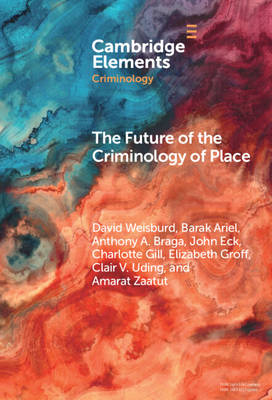
The Future of the Criminology of Place
New Directions for Research and Practice
David Weisburd, Barak Ariel, Anthony A Braga, John Eck, Charlotte Gill, Elizabeth Groff, Clair V Uding, Amarat Zaatut
€ 124,45
+ 248 punten
Uitvoering
Omschrijving
Microgeographic units of analysis have moved to the center of criminological inquiry. This Element brings together leading crime-and-place scholars to identify promising areas for future study. Section 1 introduces the Element and the importance of focusing on the future of studies of crime and place. Section 2 examines the development of hot-spots policing and the importance of focusing on its impact on communities. It also looks at how 'pracademics' can advance the science and practice of place-based policing. Section 3 focuses on place managers as prevention agents and examines how city government can influence crime at place. It further contends that rural communities need to become a key focus of crime-and-place scholarship. Section 4 emphasizes the importance of the connection of health, crime, and place. It also argues for the importance of expanding the methodological tools of crime and place to include careful ethnographic and qualitative research.
Specificaties
Betrokkenen
- Auteur(s):
- Uitgeverij:
Inhoud
- Aantal bladzijden:
- 110
- Taal:
- Engels
- Reeks:
Eigenschappen
- Productcode (EAN):
- 9781009590983
- Verschijningsdatum:
- 6/02/2025
- Uitvoering:
- Hardcover
- Formaat:
- Genaaid
- Afmetingen:
- 152 mm x 229 mm
- Gewicht:
- 317 g


Alleen bij Standaard Boekhandel
+ 248 punten op je klantenkaart van Standaard Boekhandel
Cadeau

AANGERADEN


Beoordelingen
We publiceren alleen reviews die voldoen aan de voorwaarden voor reviews. Bekijk onze voorwaarden voor reviews.