



Je cadeautjes zeker op tijd in huis hebben voor de feestdagen? Kom langs in onze winkels en vind het perfecte geschenk!
- Afhalen na 1 uur in een winkel met voorraad
- Gratis thuislevering in België vanaf € 30
- Ruim aanbod met 7 miljoen producten
Je cadeautjes zeker op tijd in huis hebben voor de feestdagen? Kom langs in onze winkels en vind het perfecte geschenk!
- Afhalen na 1 uur in een winkel met voorraad
- Gratis thuislevering in België vanaf € 30
- Ruim aanbod met 7 miljoen producten





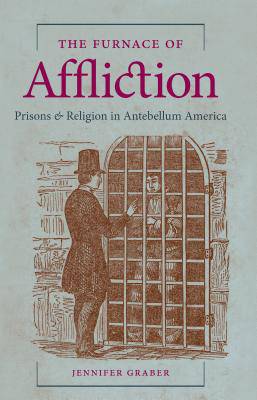
The Furnace of Affliction
Prisons and Religion in Antebellum America
Jennifer Graber
Paperback | Engels
€ 53,45
+ 106 punten
Omschrijving
Focusing on the intersection of Christianity and politics in the American penitentiary system, Jennifer Graber explores evangelical Protestants' efforts to make religion central to emerging practices and philosophies of prison discipline from the 1790s through the 1850s.
Initially, state and prison officials welcomed Protestant reformers' and ministers' recommendations, particularly their ideas about inmate suffering and redemption. Over time, however, officials proved less receptive to the reformers' activities, and inmates also opposed them. Ensuing debates between reformers, officials, and inmates revealed deep disagreements over religion's place in prisons and in the wider public sphere as the separation of church and state took hold and the nation's religious environment became more diverse and competitive. Examining the innovative New York prison system, Graber shows how Protestant reformers failed to realize their dreams of large-scale inmate conversion or of prisons that reflected their values. To keep a foothold in prisons, reformers were forced to relinquish their Protestant terminology and practices and instead to adopt secular ideas about American morals, virtues, and citizenship. Graber argues that, by revising their original understanding of prisoner suffering and redemption, reformers learned to see inmates' afflictions not as a necessary prelude to a sinner's experience of grace but as the required punishment for breaking the new nation's laws.
Initially, state and prison officials welcomed Protestant reformers' and ministers' recommendations, particularly their ideas about inmate suffering and redemption. Over time, however, officials proved less receptive to the reformers' activities, and inmates also opposed them. Ensuing debates between reformers, officials, and inmates revealed deep disagreements over religion's place in prisons and in the wider public sphere as the separation of church and state took hold and the nation's religious environment became more diverse and competitive. Examining the innovative New York prison system, Graber shows how Protestant reformers failed to realize their dreams of large-scale inmate conversion or of prisons that reflected their values. To keep a foothold in prisons, reformers were forced to relinquish their Protestant terminology and practices and instead to adopt secular ideas about American morals, virtues, and citizenship. Graber argues that, by revising their original understanding of prisoner suffering and redemption, reformers learned to see inmates' afflictions not as a necessary prelude to a sinner's experience of grace but as the required punishment for breaking the new nation's laws.
Specificaties
Betrokkenen
- Auteur(s):
- Uitgeverij:
Inhoud
- Aantal bladzijden:
- 248
- Taal:
- Engels
Eigenschappen
- Productcode (EAN):
- 9781469622255
- Verschijningsdatum:
- 1/12/2014
- Uitvoering:
- Paperback
- Formaat:
- Trade paperback (VS)
- Afmetingen:
- 156 mm x 234 mm
- Gewicht:
- 390 g


Alleen bij Standaard Boekhandel
+ 106 punten op je klantenkaart van Standaard Boekhandel
CADEAU


Beoordelingen
We publiceren alleen reviews die voldoen aan de voorwaarden voor reviews. Bekijk onze voorwaarden voor reviews.