


- Afhalen na 1 uur in een winkel met voorraad
- Gratis thuislevering in België vanaf € 30
- Ruim aanbod met 7 miljoen producten
- Afhalen na 1 uur in een winkel met voorraad
- Gratis thuislevering in België vanaf € 30
- Ruim aanbod met 7 miljoen producten





Omschrijving
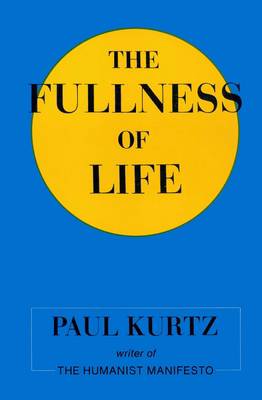
This book had its origins when Paul Kurtz published the four-page Humanist Manifesto II in The Humanist magazine.The generative ideas presented in the controversial Manifesto are fully developed in The Fullness of Life. In Part I, Kurtz takes us on a tour of the chief religious and moral philosophies available to Western man at this time. He gives detailed critiques of Christian theism and of Marxism. He shows how the original humanism of Marx has been betrayed in the Communist nations. "The crux of the tragedy of modern Communist societies is that they have abandoned these fundamental human rights."In Part II, "The Humanist Alternative," Kurtz brilliantly develops a positive viewpoint, a dynamic presentation of the elements of "the good life" in which we may realize "the human potential and the fullness of being." The author here describes the virtues of the sensual life, the joys and benefits of physical pleasure, and the various ways by which we achieve true self-realization. This section concludes with chapters on libertarianism, the principle of equality, and the democratic ethic inherent in the humanist philosophy.In Part III the author provides an arresting exposition of international problems and their intelligent solution. He stresses the global consciousness of the humanist outlook and its allegiance to all humanity, and demonstrates how the methods of reason can be applied in our personal lives and in world affairs.
Specificaties
Betrokkenen
- Auteur(s):
- Uitgeverij:
Inhoud
- Aantal bladzijden:
- 216
- Taal:
- Engels
Eigenschappen
- Productcode (EAN):
- 9780879752057
- Verschijningsdatum:
- 1/06/1980
- Uitvoering:
- Paperback
- Formaat:
- Trade paperback (VS)
- Afmetingen:
- 170 mm x 227 mm
- Gewicht:
- 385 g


Alleen bij Standaard Boekhandel
+ 62 punten op je klantenkaart van Standaard Boekhandel
CADEAU


Beoordelingen
We publiceren alleen reviews die voldoen aan de voorwaarden voor reviews. Bekijk onze voorwaarden voor reviews.