


- Afhalen na 1 uur in een winkel met voorraad
- Gratis thuislevering in België vanaf € 30
- Ruim aanbod met 7 miljoen producten
- Afhalen na 1 uur in een winkel met voorraad
- Gratis thuislevering in België vanaf € 30
- Ruim aanbod met 7 miljoen producten





€ 100,70
+ 201 punten
Omschrijving
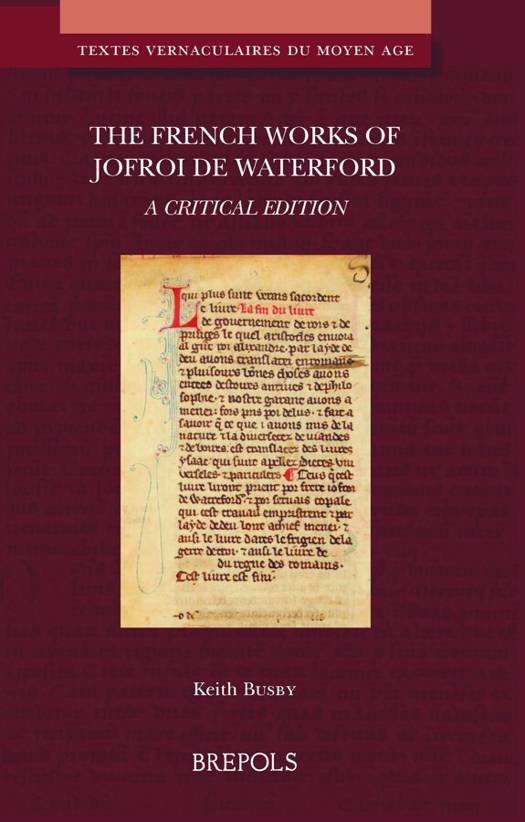
At the beginning of the fourteenth century, Jofroi, a brother of the Dominican house of St Saviour's in Waterford, Ireland, translated into French and adapted from the Latin three texts: the De excidio Troiae of the so-called 'Dares Phrygius', the Breviarium historiae romanae of Eutropius, and Pseudo-Aristotelian Secretum secretorum. While the first two, La gerre de Troi and Le regne des Romains are generally close translations, Le secre de secres is much modified by omissions and interpolations of exempla and scientific material. In his enterprise, Jofroi was aided and abetted by his scribe, the Walloon merchant and custos, Servais Copale. This book is the first critical edition of Jofroi's uvre. The texts are accompanied by a general introduction, individual introductions to each of the three texts, extensive notes, an index of proper names, and a substantial glossary. Jofroi and Servais collaborated in Waterford, not Paris, as has long been assumed, and these texts are therefore witness to the importance of French as a literary language in southeastern Ireland.
Specificaties
Betrokkenen
- Auteur(s):
- Uitgeverij:
Inhoud
- Aantal bladzijden:
- 494
- Taal:
- Engels
- Reeks:
- Reeksnummer:
- nr. 25
Eigenschappen
- Productcode (EAN):
- 9782503582948
- Verschijningsdatum:
- 17/09/2020
- Uitvoering:
- Paperback
- Formaat:
- Trade paperback (VS)
- Afmetingen:
- 155 mm x 231 mm
- Gewicht:
- 793 g


Alleen bij Standaard Boekhandel
+ 201 punten op je klantenkaart van Standaard Boekhandel
Cadeau

AANGERADEN


Beoordelingen
We publiceren alleen reviews die voldoen aan de voorwaarden voor reviews. Bekijk onze voorwaarden voor reviews.