



Bedankt voor het vertrouwen het afgelopen jaar! Om jou te bedanken bieden we GRATIS verzending (in België) aan op alles gedurende de hele maand januari.
- Afhalen na 1 uur in een winkel met voorraad
- In januari gratis thuislevering in België
- Ruim aanbod met 7 miljoen producten
Bedankt voor het vertrouwen het afgelopen jaar! Om jou te bedanken bieden we GRATIS verzending (in België) aan op alles gedurende de hele maand januari.
- Afhalen na 1 uur in een winkel met voorraad
- In januari gratis thuislevering in België
- Ruim aanbod met 7 miljoen producten





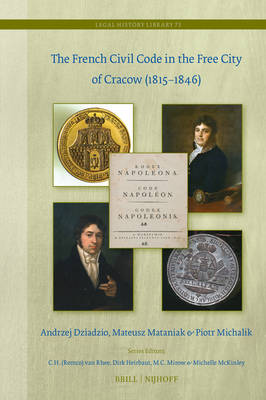
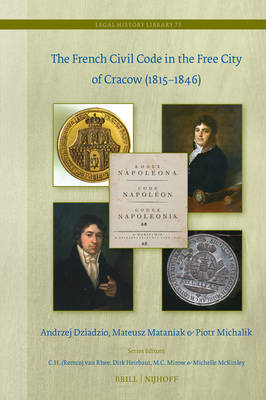
The French Civil Code in the Free City of Cracow (1815-1846)
Andrzej Dziadzio, Mateusz Mataniak, Piotr Michalik
€ 214,95
+ 429 punten
Omschrijving
This book is a summary of the extensive research by the co-authors on the validity and application of the 1804 French Civil Code in the Free City of Cracow (1815-1846), the Polish constitutional city-state established at the Congress of Vienna. From the wealth of case-law and legal practice of the Cracovian Republic emerges a picture in which its inhabitants were consciously and consistently building the structure of a modern state. As far as was possible amid the realities of post-feudal society, this state was already based on the rule of law. One of the basic elements of this legal structure was precisely the Napoleonic Code, which established the framework for the private law of the Free City, and made it a very small, but important, part of European legal heritage.
Specificaties
Betrokkenen
- Auteur(s):
- Uitgeverij:
Inhoud
- Aantal bladzijden:
- 320
- Taal:
- Engels
- Reeks:
- Reeksnummer:
- nr. 73
Eigenschappen
- Productcode (EAN):
- 9789004688735
- Verschijningsdatum:
- 17/04/2025
- Uitvoering:
- Hardcover
- Formaat:
- Genaaid
- Afmetingen:
- 155 mm x 226 mm
- Gewicht:
- 589 g


Alleen bij Standaard Boekhandel
+ 429 punten op je klantenkaart van Standaard Boekhandel
SOLDEN


Beoordelingen
We publiceren alleen reviews die voldoen aan de voorwaarden voor reviews. Bekijk onze voorwaarden voor reviews.