


- Afhalen na 1 uur in een winkel met voorraad
- Gratis thuislevering in België vanaf € 30
- Ruim aanbod met 7 miljoen producten
- Afhalen na 1 uur in een winkel met voorraad
- Gratis thuislevering in België vanaf € 30
- Ruim aanbod met 7 miljoen producten





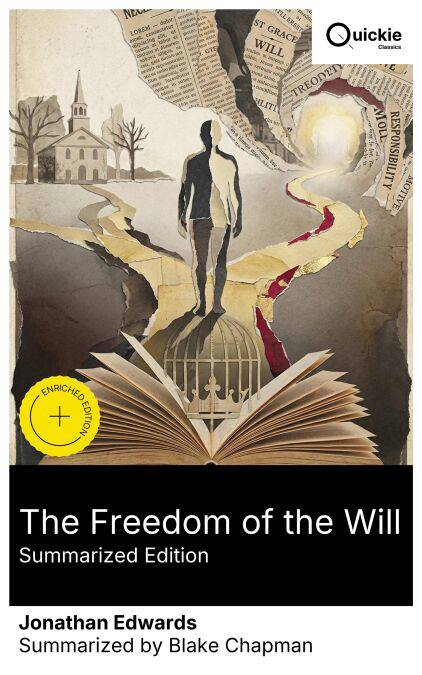
The Freedom of the Will (Summarized Edition) E-BOOK
Enriched edition. Calvinist reflections on human will, predestination, and grace—from total depravity to Romans 9:16 and the Open Theism debate
Jonathan Edwards
E-book | Engels
€ 1,99
+ 1 punten
Uitvoering
Omschrijving
Published in 1754 amid post–Great Awakening controversy, The Freedom of the Will offers a rigorous compatibilist account of agency under divine sovereignty. Edwards distinguishes natural from moral inability and argues the will follows the strongest motive arising from one's prevailing disposition. Combining scholastic logic, scriptural exegesis, and Enlightenment precision, he contests Arminian libertarianism and clarifies necessity, contingency, and the renewal of the affections. Edwards (1703–1758)—pastor, revival theologian, later missionary at Stockbridge—wrote in dialogue with Locke and in rebuttal of New England Arminians, notably Daniel Whitby. Shaped by the Northampton revivals and his study of the affections, he sought to preserve moral accountability while grounding salvation in sovereign grace, refined by pastoral conflicts and reflective exile. Scholars of theology, philosophy of action, and early modern thought will value this lucid yet demanding treatise for its durable distinctions and argumentative economy. Patient readers will find a coherent framework for reconciling freedom and grace without evading responsibility. For seminars, clergy formation, or rigorous self-study, it remains an indispensable, clarifying classic.
Quickie Classics summarizes timeless works with precision, preserving the author's voice and keeping the prose clear, fast, and readable—distilled, never diluted. Enriched Edition extras: Introduction · Synopsis · Historical Context · Author Biography · Brief Analysis · 4 Reflection Q&As · Editorial Footnotes.
Quickie Classics summarizes timeless works with precision, preserving the author's voice and keeping the prose clear, fast, and readable—distilled, never diluted. Enriched Edition extras: Introduction · Synopsis · Historical Context · Author Biography · Brief Analysis · 4 Reflection Q&As · Editorial Footnotes.
Specificaties
Betrokkenen
- Auteur(s):
- Uitgeverij:
Inhoud
- Aantal bladzijden:
- 125
- Taal:
- Engels
Eigenschappen
- Productcode (EAN):
- 8596547884408
- Verschijningsdatum:
- 9/01/2026
- Uitvoering:
- E-book
- Beveiligd met:
- Digital watermarking
- Formaat:
- ePub


Alleen bij Standaard Boekhandel
+ 1 punten op je klantenkaart van Standaard Boekhandel
Cadeau

AANGERADEN


Beoordelingen
We publiceren alleen reviews die voldoen aan de voorwaarden voor reviews. Bekijk onze voorwaarden voor reviews.