


- Afhalen na 1 uur in een winkel met voorraad
- Gratis thuislevering in België vanaf € 30
- Ruim aanbod met 7 miljoen producten
- Afhalen na 1 uur in een winkel met voorraad
- Gratis thuislevering in België vanaf € 30
- Ruim aanbod met 7 miljoen producten





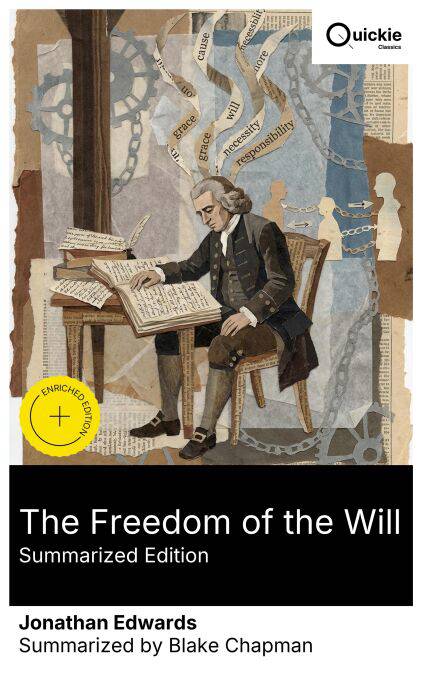
The Freedom of the Will (Summarized Edition) E-BOOK
Enriched edition. A Calvinist Discourse on God's Sovereignty, Foreordination, Total Depravity, and Salvation by Divine Grace
Jonathan Edwards
E-book | Engels
€ 1,99
+ 1 punten
Uitvoering
Omschrijving
The Freedom of the Will (Vol. 1-4) offers Edwards's rigorous compatibilist account: the will follows the strongest motive, and moral, not natural, necessity grounds responsibility. Defining terms with scholastic clarity, he rejects self-determining power and chance, and reconciles divine foreknowledge with accountability. Its exacting, scripture-laced prose situates the treatise within eighteenth-century Calvinist–Arminian debates and engages transatlantic interlocutors such as Daniel Whitby. Edwards, a New England divine shaped by the Great Awakening, wrote the work in Stockbridge after his Northampton dismissal. Amid pastoral and missionary labors, and conversant with Locke's psychology, he forged a metaphysics of inclination and habit to defend God's sovereignty without evacuating human responsibility. This four-volume presentation rewards close study by philosophers of action, theologians, and intellectual historians. Its conceptual precision and patient engagement with objections clarify live disputes over freedom, causation, and moral agency. Demanding yet lucid, it remains a landmark guide for readers seeking a systematic case for compatibilism.
Quickie Classics summarizes timeless works with precision, preserving the author's voice and keeping the prose clear, fast, and readable—distilled, never diluted. Enriched Edition extras: Introduction · Synopsis · Historical Context · Author Biography · Brief Analysis · 4 Reflection Q&As · Editorial Footnotes.
Quickie Classics summarizes timeless works with precision, preserving the author's voice and keeping the prose clear, fast, and readable—distilled, never diluted. Enriched Edition extras: Introduction · Synopsis · Historical Context · Author Biography · Brief Analysis · 4 Reflection Q&As · Editorial Footnotes.
Specificaties
Betrokkenen
- Auteur(s):
- Uitgeverij:
Inhoud
- Aantal bladzijden:
- 125
- Taal:
- Engels
Eigenschappen
- Productcode (EAN):
- 8596547880752
- Verschijningsdatum:
- 9/01/2026
- Uitvoering:
- E-book
- Beveiligd met:
- Digital watermarking
- Formaat:
- ePub


Alleen bij Standaard Boekhandel
+ 1 punten op je klantenkaart van Standaard Boekhandel
Cadeau

AANGERADEN


Beoordelingen
We publiceren alleen reviews die voldoen aan de voorwaarden voor reviews. Bekijk onze voorwaarden voor reviews.