


- Afhalen na 1 uur in een winkel met voorraad
- Gratis thuislevering in België vanaf € 30
- Ruim aanbod met 7 miljoen producten
- Afhalen na 1 uur in een winkel met voorraad
- Gratis thuislevering in België vanaf € 30
- Ruim aanbod met 7 miljoen producten





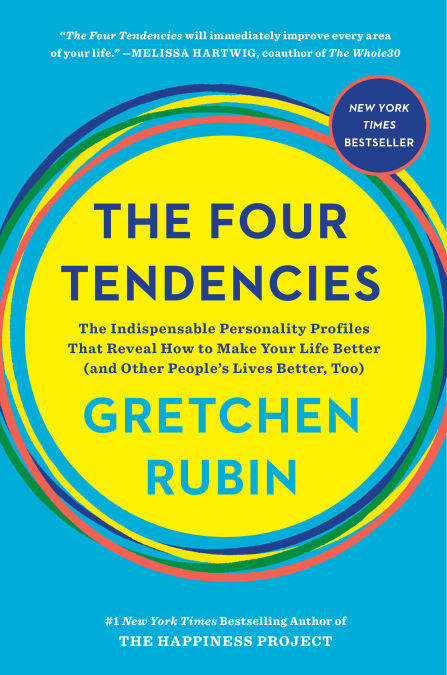
The Four Tendencies E-BOOK
The Indispensable Personality Profiles That Reveal How to Make Your Life Better (and Other People's Lives Better, Too)
Gretchen Rubin
E-book | Engels
€ 2,30
+ 2 punten
Uitvoering
Omschrijving
NEW YORK TIMES BESTSELLER • Are you an Upholder, a Questioner, an Obliger, or a Rebel? From the author of Better Than Before and The Happiness Project comes a groundbreaking analysis of personality type that “will immediately improve every area of your life” (Melissa Urban, co-founder of the Whole30).
During her multibook investigation into human nature, Gretchen Rubin realized that by asking the seemingly dry question “How do I respond to expectations?” we gain explosive self-knowledge. She discovered that based on their answer, people fit into Four Tendencies:
• Upholders meet outer and inner expectations readily. “Discipline is my freedom.”
• Questioners meet inner expectations, but meet outer expectations only if they make sense. “If you convince me why, I’ll comply.”
• Obligers (the largest Tendency) meet outer expectations, but struggle to meet inner expectations—therefore, they need outer accountability to meet inner expectations. “You can count on me, and I’m counting on you to count on me.”
• Rebels (the smallest group) resist all expectations, outer and inner alike. They do what they choose to do, when they choose to do it, and typically they don’t tell themselves what to do. “You can’t make me, and neither can I.”
Our Tendency shapes every aspect of our behavior, so using this framework allows us to make better decisions, meet deadlines, suffer less stress, and engage more effectively. It’s far easier to succeed when you know what works for you.
With sharp insight, compelling research, and hilarious examples, The Four Tendencies will help you get happier, healthier, more productive, and more creative.
During her multibook investigation into human nature, Gretchen Rubin realized that by asking the seemingly dry question “How do I respond to expectations?” we gain explosive self-knowledge. She discovered that based on their answer, people fit into Four Tendencies:
• Upholders meet outer and inner expectations readily. “Discipline is my freedom.”
• Questioners meet inner expectations, but meet outer expectations only if they make sense. “If you convince me why, I’ll comply.”
• Obligers (the largest Tendency) meet outer expectations, but struggle to meet inner expectations—therefore, they need outer accountability to meet inner expectations. “You can count on me, and I’m counting on you to count on me.”
• Rebels (the smallest group) resist all expectations, outer and inner alike. They do what they choose to do, when they choose to do it, and typically they don’t tell themselves what to do. “You can’t make me, and neither can I.”
Our Tendency shapes every aspect of our behavior, so using this framework allows us to make better decisions, meet deadlines, suffer less stress, and engage more effectively. It’s far easier to succeed when you know what works for you.
With sharp insight, compelling research, and hilarious examples, The Four Tendencies will help you get happier, healthier, more productive, and more creative.
Specificaties
Betrokkenen
- Auteur(s):
- Uitgeverij:
Inhoud
- Aantal bladzijden:
- 272
- Taal:
- Engels
Eigenschappen
- Productcode (EAN):
- 9781524760922
- Verschijningsdatum:
- 11/09/2017
- Uitvoering:
- E-book
- Beveiligd met:
- Adobe DRM
- Formaat:
- ePub


Alleen bij Standaard Boekhandel
+ 2 punten op je klantenkaart van Standaard Boekhandel
AANGERADEN


Beoordelingen
We publiceren alleen reviews die voldoen aan de voorwaarden voor reviews. Bekijk onze voorwaarden voor reviews.