


- Afhalen na 1 uur in een winkel met voorraad
- Gratis thuislevering in België vanaf € 30
- Ruim aanbod met 7 miljoen producten
- Afhalen na 1 uur in een winkel met voorraad
- Gratis thuislevering in België vanaf € 30
- Ruim aanbod met 7 miljoen producten





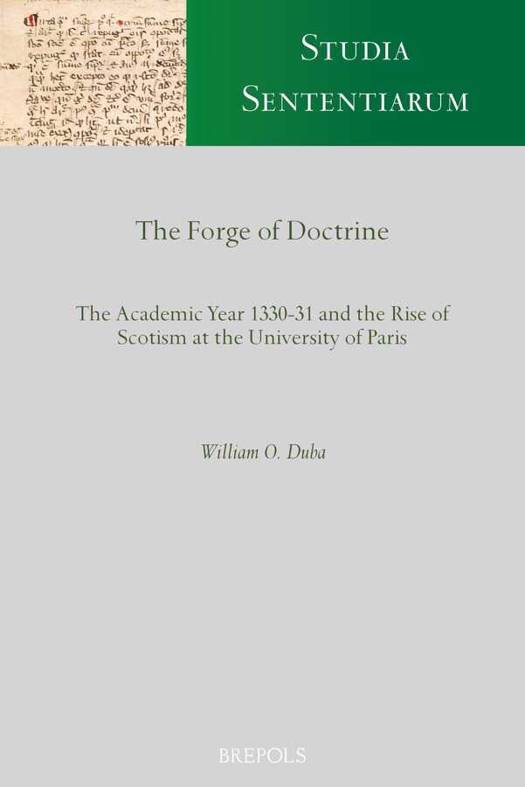
The Forge of Doctrine
The Academic Year 1330-31 and the Rise of Scotism at the University of Paris
William O Duba
€ 100,70
+ 201 punten
Omschrijving
A rare survival provides unmatched access to the the medieval classroom. In the academic year 1330-31, the Franciscan theologian, William of Brienne, lectured on Peter Lombard's Sentences and disputed with the other theologians at the University of Paris. The original, official notes of these lectures and disputes survives in a manuscript codex at the National Library of the Czech Republic, and they constitute the oldest known original record of an entire university course. An analysis of this manuscript reconstructs the daily reality of the University of Paris in the fourteenth century, delineating the pace and organization of instruction within the school and the debates between the schools. The transcription made during William's lectures and the later modifications and additions reveal how the major vehicle for Scholastic thought, the written Sentences commentary, relates to fourteenth-century teaching. As a teacher and a scholar, William of Brienne was a dedicated follower of the philosophy and theology of John Duns Scotus (+1308). He constructed Scotist doctrine for his students and defended it from his peers. This book shows concretely how scholastic thinkers made, communicated, and debated ideas at the medieval universities. Appendices document the entire process with critical editions of William's academic debates (principia), his promotion speech, and a selection of his lectures and sources.?
Specificaties
Betrokkenen
- Auteur(s):
- Uitgeverij:
Inhoud
- Aantal bladzijden:
- 444
- Taal:
- Engels
- Reeks:
- Reeksnummer:
- nr. 2
Eigenschappen
- Productcode (EAN):
- 9782503573274
- Verschijningsdatum:
- 14/07/2017
- Uitvoering:
- Paperback
- Formaat:
- Trade paperback (VS)
- Afmetingen:
- 155 mm x 234 mm
- Gewicht:
- 793 g


Alleen bij Standaard Boekhandel
+ 201 punten op je klantenkaart van Standaard Boekhandel
Cadeau

AANGERADEN


Beoordelingen
We publiceren alleen reviews die voldoen aan de voorwaarden voor reviews. Bekijk onze voorwaarden voor reviews.