


- Afhalen na 1 uur in een winkel met voorraad
- Gratis thuislevering in België vanaf € 30
- Ruim aanbod met 7 miljoen producten
- Afhalen na 1 uur in een winkel met voorraad
- Gratis thuislevering in België vanaf € 30
- Ruim aanbod met 7 miljoen producten





€ 195,45
+ 390 punten
Omschrijving
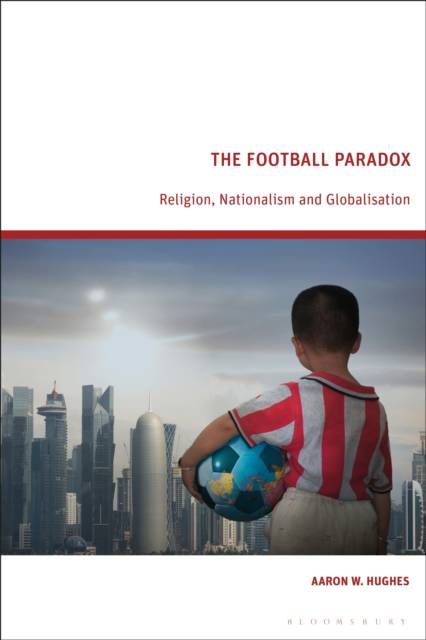
By examining football, and exploring the religious, economic and political forces that interact with the sport, this book demonstrates how the global game becomes a prism through which we can view and understand the world we inhabit.
With over three billion fans in the world, football has a larger following than either Christianity or Islam, the world's two largest religions, and in this book, Aaron W. Hughes illustrates how football and religion function in our increasingly globalized world. At the same time, the book considers how our globalized world has changed our understanding of both football and religion. Hughes situates football within the larger discourse of religion and sports, paying attention to some of the sociological features of sport and showing how football can function as a modern religion, especially in the context of the postmodern urban landscape. Drawing upon a set of case studies and examples from the MENA region, Europe, and North and South America, and using theoretical frameworks from religious studies and global studies, each chapter highlights common themes and articulates questions for future research. Through case studies, such as the 2022 World Cup in Qatar, this book highlights how the sport has increasingly become an important arena for soft power and sportswashing, yet paradoxically also of female empowerment and the symbolic construction of cultural belonging. This book concludes by making the case for the creation of a new subfield called "football studies".Specificaties
Betrokkenen
- Auteur(s):
- Uitgeverij:
Inhoud
- Aantal bladzijden:
- 224
- Taal:
- Engels
Eigenschappen
- Productcode (EAN):
- 9781350527379
- Verschijningsdatum:
- 19/02/2026
- Uitvoering:
- Hardcover
- Formaat:
- Genaaid
- Afmetingen:
- 156 mm x 234 mm
- Gewicht:
- 489 g



Alleen bij Standaard Boekhandel
+ 390 punten op je klantenkaart van Standaard Boekhandel
Cadeau

AANGERADEN


Beoordelingen
We publiceren alleen reviews die voldoen aan de voorwaarden voor reviews. Bekijk onze voorwaarden voor reviews.