


- Afhalen na 1 uur in een winkel met voorraad
- Gratis thuislevering in België vanaf € 30
- Ruim aanbod met 7 miljoen producten
- Afhalen na 1 uur in een winkel met voorraad
- Gratis thuislevering in België vanaf € 30
- Ruim aanbod met 7 miljoen producten





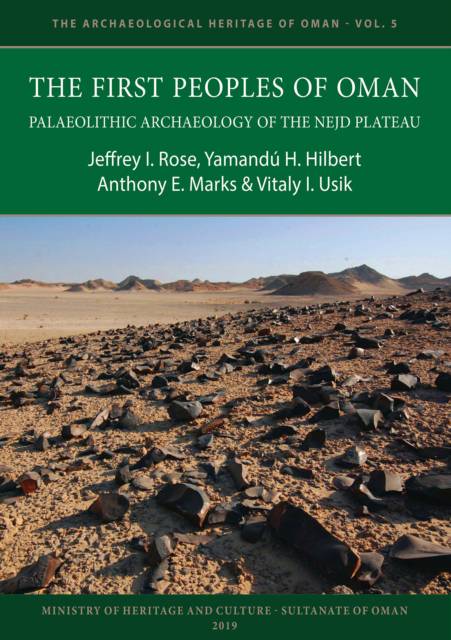
The First Peoples of Oman
Palaeolithic Archaeology of the Nejd Plateau
Jeffrey I Rose, Yamandu H Hilbert, Anthony E Marks, Vitaly I Usik
€ 60,95
+ 121 punten
Omschrijving
In Dhofar, the southern Governorate of the Sultanate of Oman, the deep canyons cutting the Nejd plateau once flowed with perennial rivers, feeding wetland environments, forests, and grasslands across the now desiccated interior. The first peoples of Oman flourished along these waterways, drawn to the freshwater springs and abundant game, as well as the myriad chert outcrops with which to fashion their hunting implements and other tools. The landscapes of the Nejd Plateau are a natural museum of human prehistory, covered in carpets of chipped stone debris. The archaeological evidence presented in this work encompasses the cultural remains of over a million years of successive human occupations, from the Lower Palaeolithic to the Late Palaeolithic. Once considered an evolutionary backwater or merely a migratory way station, the archaeology of Dhofar requires a fundamental reconsideration of the role of Southern Arabia in the origin and dispersal of our species.
Specificaties
Betrokkenen
- Auteur(s):
- Uitgeverij:
Inhoud
- Aantal bladzijden:
- 216
- Taal:
- Engels
- Reeks:
- Reeksnummer:
- nr. 5
Eigenschappen
- Productcode (EAN):
- 9781789692846
- Verschijningsdatum:
- 10/07/2019
- Uitvoering:
- Paperback
- Formaat:
- Trade paperback (VS)
- Afmetingen:
- 208 mm x 297 mm
- Gewicht:
- 1020 g


Alleen bij Standaard Boekhandel
+ 121 punten op je klantenkaart van Standaard Boekhandel
Cadeau

AANGERADEN


Beoordelingen
We publiceren alleen reviews die voldoen aan de voorwaarden voor reviews. Bekijk onze voorwaarden voor reviews.