



Bedankt voor het vertrouwen het afgelopen jaar! Om jou te bedanken bieden we GRATIS verzending (in België) aan op alles gedurende de hele maand januari.
- Afhalen na 1 uur in een winkel met voorraad
- In januari gratis thuislevering in België
- Ruim aanbod met 7 miljoen producten
Bedankt voor het vertrouwen het afgelopen jaar! Om jou te bedanken bieden we GRATIS verzending (in België) aan op alles gedurende de hele maand januari.
- Afhalen na 1 uur in een winkel met voorraad
- In januari gratis thuislevering in België
- Ruim aanbod met 7 miljoen producten





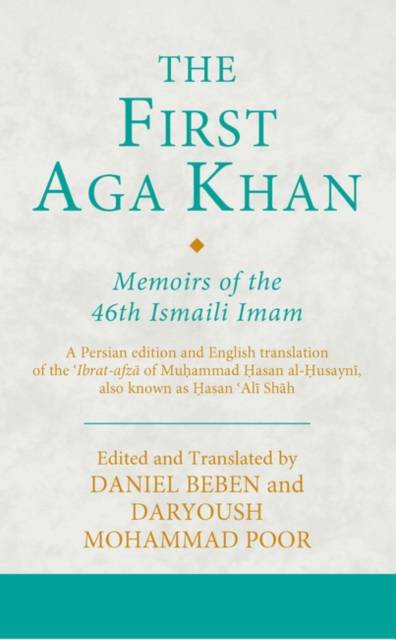
The First Aga Khan
Memoirs of the 46th Ismaili Imam: A Persian Edition and English Translation of Hasan 'Ali Shah's Tarkha-i 'ibrat-afza
€ 61,45
+ 122 punten
Omschrijving
I.B. Tauris in association with the Institute of Ismaili Studies
Muhammad Hasan al-Husayni, also known as Hasan 'Ali Shah and, more generally, as the Aga Khan (1804-1881), was the 46th Imam of the Nizari Ismailis and the first Ismaili Imam to bear the title of Aga Khan, bestowed on him by the contemporary Qajar monarch of Persia. This book is the first English translation of his memoirs, the 'Ibrat-afza, `A Book of Exhortation, or Example', and includes a new edition of the Persian text and a detailed introduction to the work and its context. The 'Ibrat-afza was composed in the year 1851, following the Ismaili Imam's departure from Persia and his permanent settlement in India. The text recounts the Aga Khan's early life and political career as the governor of the province of Kirman in Persia, and narrates the dramatic events of his conflict with the Qajar establishment followed by his subsequent travels and exploits in Afghanistan and British India. The 'Ibrat-afza provides a rare example of an autobiographical account from an Ismaili Imam and a first-hand perspective on the regional politics of the age. It offers a window into the history of the Ismailis of Persia, India and Central Asia at the dawn of the modern era of their history. Consequently, the book will be of great interest to both researchers and general readers interested in Ismaili history and in the history of the Islamic world in the nineteenth century.
Muhammad Hasan al-Husayni, also known as Hasan 'Ali Shah and, more generally, as the Aga Khan (1804-1881), was the 46th Imam of the Nizari Ismailis and the first Ismaili Imam to bear the title of Aga Khan, bestowed on him by the contemporary Qajar monarch of Persia. This book is the first English translation of his memoirs, the 'Ibrat-afza, `A Book of Exhortation, or Example', and includes a new edition of the Persian text and a detailed introduction to the work and its context. The 'Ibrat-afza was composed in the year 1851, following the Ismaili Imam's departure from Persia and his permanent settlement in India. The text recounts the Aga Khan's early life and political career as the governor of the province of Kirman in Persia, and narrates the dramatic events of his conflict with the Qajar establishment followed by his subsequent travels and exploits in Afghanistan and British India. The 'Ibrat-afza provides a rare example of an autobiographical account from an Ismaili Imam and a first-hand perspective on the regional politics of the age. It offers a window into the history of the Ismailis of Persia, India and Central Asia at the dawn of the modern era of their history. Consequently, the book will be of great interest to both researchers and general readers interested in Ismaili history and in the history of the Islamic world in the nineteenth century.
Specificaties
Betrokkenen
- Uitgeverij:
Inhoud
- Aantal bladzijden:
- 272
- Taal:
- Engels
- Reeks:
- Reeksnummer:
- nr. 24
Eigenschappen
- Productcode (EAN):
- 9781788315050
- Verschijningsdatum:
- 30/10/2018
- Uitvoering:
- Hardcover
- Formaat:
- Genaaid
- Afmetingen:
- 150 mm x 218 mm
- Gewicht:
- 521 g

Alleen bij Standaard Boekhandel
+ 122 punten op je klantenkaart van Standaard Boekhandel
SOLDEN


Beoordelingen
We publiceren alleen reviews die voldoen aan de voorwaarden voor reviews. Bekijk onze voorwaarden voor reviews.