


- Afhalen na 1 uur in een winkel met voorraad
- Gratis thuislevering in België vanaf € 30
- Ruim aanbod met 7 miljoen producten
- Afhalen na 1 uur in een winkel met voorraad
- Gratis thuislevering in België vanaf € 30
- Ruim aanbod met 7 miljoen producten





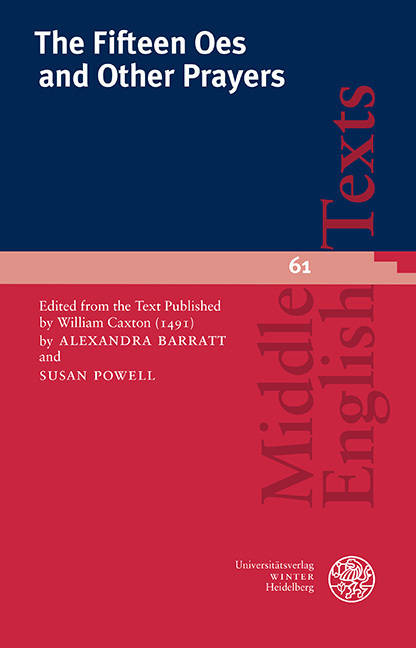
The Fifteen Oes and Other Prayers
Edited from the Text Published by William Caxton (1491)
€ 88,45
+ 176 punten
Omschrijving
In 1491, at the command of two royal ladies - Elizabeth of York, wife of Henry VII, and Lady Margaret Beaufort, Henry's mother - William Caxton published a small collection of prayers in Latin and English (STC 20195). The volume is now known as 'The Fifteen Oes' from its opening set of prayers. The Latin Oes were very popular and probably of English origin, but sometimes erroneously attributed to St Birgitta of Sweden. Although the prayers were translated into numerous European vernaculars, English versions, as here, are relatively rare. The Oes constitute about a third of the book. About thirty other prayers in English and Latin follow, some with antiphons, responses, and psalms (in Latin), many of them also common in later medieval books of hours and other prayer books, in England and elsewhere. The whole collection is important for several reasons. It was the first collection of prayers to be printed in England, and then to be frequently reprinted as a supplement to printed books of hours; it is connected with Lady Margaret Beaufort and highlights her close relationship with Caxton and also with Syon Abbey, the only Birgittine house in England; it combines Latin prayers with English, indicating that literate laywomen at the end of the fifteenth century were using both the vernacular and the official language of the Church in their devotions.
Specificaties
Betrokkenen
- Uitgeverij:
Inhoud
- Aantal bladzijden:
- 54
- Taal:
- Engels, Middelengels
- Reeks:
- Reeksnummer:
- nr. 61
Eigenschappen
- Productcode (EAN):
- 9783825348519
- Verschijningsdatum:
- 8/06/2021
- Uitvoering:
- Paperback
- Formaat:
- Trade paperback (VS)
- Afmetingen:
- 155 mm x 234 mm
- Gewicht:
- 716 g

Alleen bij Standaard Boekhandel
+ 176 punten op je klantenkaart van Standaard Boekhandel
CADEAU


Beoordelingen
We publiceren alleen reviews die voldoen aan de voorwaarden voor reviews. Bekijk onze voorwaarden voor reviews.