


- Afhalen na 1 uur in een winkel met voorraad
- Gratis thuislevering in België vanaf € 30
- Ruim aanbod met 7 miljoen producten
- Afhalen na 1 uur in een winkel met voorraad
- Gratis thuislevering in België vanaf € 30
- Ruim aanbod met 7 miljoen producten





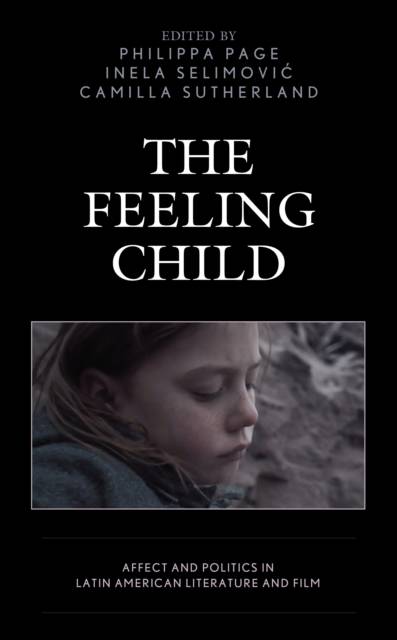
The Feeling Child
Affect and Politics in Latin American Literature and Film
€ 195,45
+ 390 punten
Omschrijving
The Feeling Child: Affect and Politics in Latin American Literature and Film compiles a series of essays focusing on the figure of the child within the specific context of the "affective turn" in the study of contemporary sociocultural settings across Latin America. This edited volume looks specifically at the intersection between cultural constructions of childhood and the affective turn within the contemporary sociopolitical landscape of Latin America. The editors and contributors share a common aim in furthering comprehension of the particular intensity of the child's affective presence--spectatorial, haptic, silent, and spectral, among others--in contemporary Latin American cultural expression. The contributions herein approach this theoretical challenge through an interdisciplinary lens which brings together two burgeoning strands of inquiry. The first is the notion of childhood as a significant, and inherently political, sociocultural space; the second is the recognition that affect is integral and fundamental to gaining a more complex understanding of the manner in which contemporary social worlds are made. In each case, this affective presence is teased out as a register of society, shedding light on the issues marking out the current sociopolitical landscape--in particular the traces of the recent past--in the regions represented. This book brings together established international scholars and young academics focusing on Argentina, Bolivia, Chile, Cuba, and Peru.
Specificaties
Betrokkenen
- Uitgeverij:
Inhoud
- Aantal bladzijden:
- 192
- Taal:
- Engels
- Reeks:
Eigenschappen
- Productcode (EAN):
- 9781498574402
- Verschijningsdatum:
- 15/11/2018
- Uitvoering:
- Hardcover
- Formaat:
- Genaaid
- Afmetingen:
- 160 mm x 231 mm
- Gewicht:
- 458 g

Alleen bij Standaard Boekhandel
+ 390 punten op je klantenkaart van Standaard Boekhandel
Cadeau

AANGERADEN


Beoordelingen
We publiceren alleen reviews die voldoen aan de voorwaarden voor reviews. Bekijk onze voorwaarden voor reviews.