


- Afhalen na 1 uur in een winkel met voorraad
- Gratis thuislevering in België vanaf € 30
- Ruim aanbod met 7 miljoen producten
- Afhalen na 1 uur in een winkel met voorraad
- Gratis thuislevering in België vanaf € 30
- Ruim aanbod met 7 miljoen producten





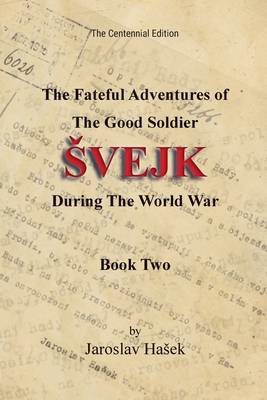
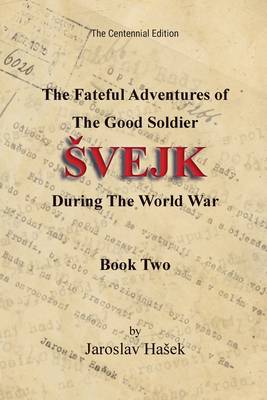
The Fateful Adventures of the Good Soldier Svejk During the World War
The Centennial Edition - Book Two
Jaroslav Hasek
Paperback | Engels
€ 26,45
+ 52 punten
Uitvoering
Omschrijving
In Book Two of The Fateful Adventures of the Good Soldier Svejk, the reader boards a military train bound for the front-or so it appears. What follows is not a march toward battle but a prolonged detour through mishap, misidentification, and the self-consuming logic of military bureaucracy. At every stop-railway stations, police offices, infirmaries, barracks-Svejk is examined, interrogated, classified, misplaced, and examined again. Each authority must determine who he is, where he belongs, and whether he is an idiot, a criminal, or a spy.
Rather than advancing the plot through decisive action, Hasek responds to this diagnostic frenzy with episodes: monologues, cross-examinations, false conclusions, and comical reversals. The novel begins to test itself, submitting its protagonist to trial after trial without ever reaching judgment. Identity exists only as something provisional-what can be written down, stamped, transferred, or revoked.
This volume is the second of the two commonly regarded as the "easier" parts of the novel-praised for their narrative coherence, episodic clarity, and accessibility-yet it is here that Hasek's method fully crystallizes. The story becomes centrifugal rather than linear, throwing Svejk outward through institutions that cannot contain him. Along the way, the book accumulates reports, testimonies, dossiers, and tales within tales, revealing a world governed less by intention than by paperwork.
What begins as a journey toward war widens into an inquiry into obedience, responsibility, and command. Svejk obeys every order, misunderstands nothing essential, and steadily disarms authority by exposing its contradictions. Book Two stands at the threshold of the novel's deeper structural logic, where comedy, bureaucracy, and moral inquiry converge-without resolution, and without appeal.
The Centennial Edition includes extensive analytical apparatus, among it
Frantisek Josef and the Grammar of Czech Subjecthood in Hasek's Opening Line and Svejk on Trial: Rethinking Hasek's Novel as a Pendulum of Prosecution and Defense.
An additional companion essay, Svejkardom: Recognition, Survival, and the Grammar of a World, extends this interpretive framework online at svejkcentral.com/Analyses.
Together these translator-authored texts examine how Czech morphosyntax, procedural language, and the experiential concept svejkárna (svejkardom) shape contemporary readings of Hasek's novel.Specificaties
Betrokkenen
- Auteur(s):
- Vertaler(s):
- Uitgeverij:
Inhoud
- Aantal bladzijden:
- 334
- Taal:
- Engels
Eigenschappen
- Productcode (EAN):
- 9798994308424
- Verschijningsdatum:
- 14/02/2026
- Uitvoering:
- Paperback
- Formaat:
- Trade paperback (VS)
- Afmetingen:
- 152 mm x 229 mm
- Gewicht:
- 449 g


Alleen bij Standaard Boekhandel
+ 52 punten op je klantenkaart van Standaard Boekhandel
AANGERADEN


Beoordelingen
We publiceren alleen reviews die voldoen aan de voorwaarden voor reviews. Bekijk onze voorwaarden voor reviews.