


- Afhalen na 1 uur in een winkel met voorraad
- Gratis thuislevering in België vanaf € 30
- Ruim aanbod met 7 miljoen producten
- Afhalen na 1 uur in een winkel met voorraad
- Gratis thuislevering in België vanaf € 30
- Ruim aanbod met 7 miljoen producten





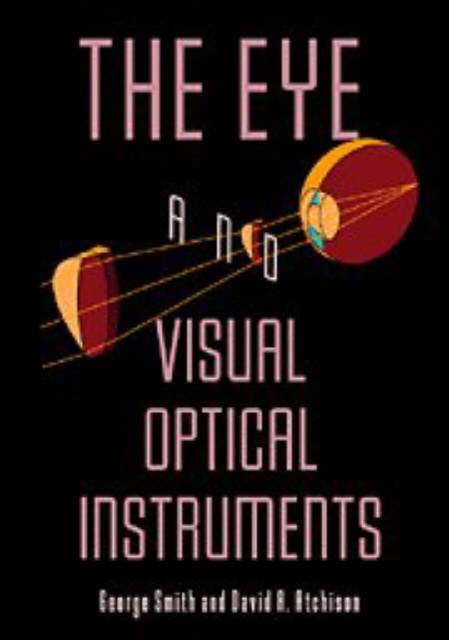
The Eye and Visual Optical Instruments
George Smith, Smith George, Atchison David a
Paperback | Engels
€ 188,95
+ 377 punten
Omschrijving
A wide variety of optical instruments exists in which the human eye forms an integral part of the system. This book provides a detailed description of the visual ergonomics of such instruments. The book begins with a section on image formation and basic optical components. The authors then discuss various optical instruments that can be adequately described using geometrical optics, and follow this with a section on diffraction and interference, and the instruments based on these effects. There are separate sections devoted to ophthalmic instruments and aberration theory, with a final section covering visual ergonomics in depth. Containing many problems and solutions, this book will be of great use to undergraduate and graduate students of optometry, optical design, optical engineering, and visual science, and to professionals working in these and related fields.
Specificaties
Betrokkenen
- Auteur(s):
- Uitgeverij:
Inhoud
- Aantal bladzijden:
- 828
- Taal:
- Engels
Eigenschappen
- Productcode (EAN):
- 9780521478205
- Verschijningsdatum:
- 28/02/1997
- Uitvoering:
- Paperback
- Formaat:
- Trade paperback (VS)
- Afmetingen:
- 183 mm x 257 mm
- Gewicht:
- 1437 g


Alleen bij Standaard Boekhandel
+ 377 punten op je klantenkaart van Standaard Boekhandel
Wedstrijd


Beoordelingen
We publiceren alleen reviews die voldoen aan de voorwaarden voor reviews. Bekijk onze voorwaarden voor reviews.