


- Afhalen na 1 uur in een winkel met voorraad
- Gratis thuislevering in België vanaf € 30
- Ruim aanbod met 7 miljoen producten
- Afhalen na 1 uur in een winkel met voorraad
- Gratis thuislevering in België vanaf € 30
- Ruim aanbod met 7 miljoen producten





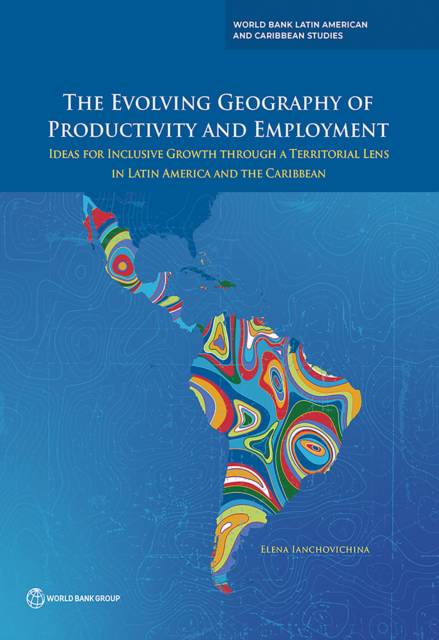
The Evolving Geography of Productivity and Employment
Ideas for Inclusive Growth through a Territorial Lens in Latin America and the Caribbean
Elena Ianchovichina
€ 65,45
+ 130 punten
Omschrijving
The Evolving Geography of Productivity and Employment: Ideas for Inclusive Growth through a Territorial Lens in Latin America and the Caribbean employs a territorial lens to understand the persistently low economic growth rates in Latin America and the Caribbean (LAC). Using new data and methods, it shows that deindustrialization, distance, and divisions offer intertwined explanations for an urban productivity paradox in the LAC region: its highly dense cities should be among the world's most productive, yet they are not. LAC cities have been held back by lack of dynamism, poor connectivity, and divisions into disconnected poor and affluent neighborhoods. Deindustrialization has shifted urban employment, especially in the largest LAC cities, away from manufacturing and toward less dynamic, low-productivity nontradable activities, such as retail trade and personal and other services, that profit less from agglomeration, especially in highly congested cities. Although employment in urban tradable services has risen, the increase has not been strong enough to offset the decline in manufacturing employment. Meanwhile, intercity connectivity issues have undermined the performance of the region's network of cities by restricting market access and firms' ability to benefit from specialization in smaller cities. Within cities, poor connectivity and residential labor market segregation have limited the gains from agglomeration to neighborhoods in central business districts where formal firms operate. Informality has persisted in low-income neighborhoods, where residents face multiple deprivations. By contrast, many agricultural and mining areas have benefited from the strong demand for commodities by China and other fast-growing economies, particularly during the Golden Decade (2003-13), leading to a decline in territorial inequality in most countries in the region. The report concludes that to encourage inclusive growth, countries must more efficiently transform natural wealth into human capital, infrastructure, and institutions and improve the competitiveness of the urban economy. It then sketches out the contours of such a development strategy, identifying policy priorities at the national, regional, and local levels.
Specificaties
Betrokkenen
- Auteur(s):
- Uitgeverij:
Inhoud
- Aantal bladzijden:
- 244
- Taal:
- Engels
- Reeks:
Eigenschappen
- Productcode (EAN):
- 9781464819599
- Verschijningsdatum:
- 27/03/2024
- Uitvoering:
- Paperback
- Formaat:
- Trade paperback (VS)
- Afmetingen:
- 203 mm x 267 mm
- Gewicht:
- 517 g


Alleen bij Standaard Boekhandel
+ 130 punten op je klantenkaart van Standaard Boekhandel
Cadeau

AANGERADEN


Beoordelingen
We publiceren alleen reviews die voldoen aan de voorwaarden voor reviews. Bekijk onze voorwaarden voor reviews.