


- Afhalen na 1 uur in een winkel met voorraad
- Gratis thuislevering in België vanaf € 30
- Ruim aanbod met 7 miljoen producten
- Afhalen na 1 uur in een winkel met voorraad
- Gratis thuislevering in België vanaf € 30
- Ruim aanbod met 7 miljoen producten





€ 19,99
+ 19 punten
Omschrijving
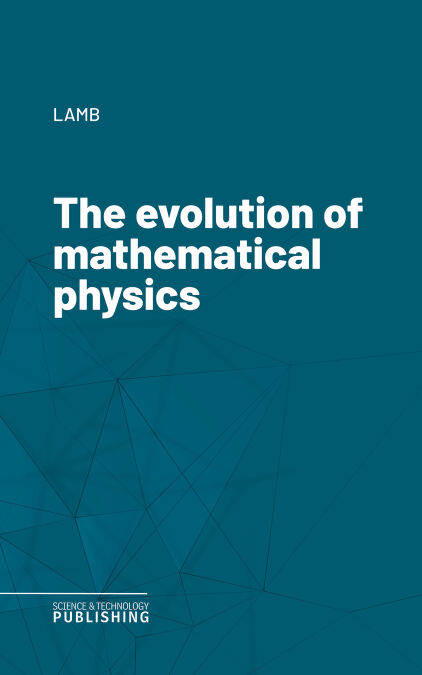
The Evolution of Mathematical Physics is a comprehensive exploration of the historical development and profound transformation of mathematical physics from its earliest origins to the dawn of the twentieth century. Authored by Jean Gaston Darboux, a renowned French mathematician, the book meticulously traces the interplay between mathematics and physics, illustrating how abstract mathematical concepts have continually shaped and been shaped by the quest to understand the natural world. Darboux begins by examining the ancient roots of mathematical thought, highlighting the contributions of Greek philosophers and mathematicians such as Euclid, Archimedes, and Ptolemy, whose foundational work in geometry, mechanics, and astronomy laid the groundwork for future scientific inquiry. The narrative then moves through the Middle Ages, noting the preservation and transmission of mathematical knowledge by Arab scholars, before arriving at the revolutionary advances of the Renaissance and Enlightenment periods. Central to the book is the detailed account of the emergence of calculus, pioneered by Newton and Leibniz, and its pivotal role in formulating the laws of motion and gravitation. Darboux delves into the subsequent refinement of mathematical methods, including the development of differential equations, variational principles, and the rigorous formalization of analysis, all of which enabled physicists to model increasingly complex phenomena. The text also explores the rise of mathematical physics as a distinct discipline, marked by the synthesis of experimental observation and mathematical abstraction. Key figures such as Euler, Lagrange, Laplace, Fourier, and Gauss are profiled for their groundbreaking contributions to mechanics, thermodynamics, electromagnetism, and celestial dynamics. Darboux emphasizes the growing importance of mathematical rigor and generalization, culminating in the sophisticated frameworks of nineteenth-century physics, such as Maxwell’s equations and the theory of elasticity. Throughout, Darboux reflects on the philosophical implications of the evolving relationship between mathematics and physics, considering questions of determinism, the nature of scientific laws, and the limits of human knowledge. The book concludes with a forward-looking perspective, anticipating the challenges and opportunities that new mathematical discoveries would bring to the physical sciences. Rich in historical detail and intellectual insight, The Evolution of Mathematical Physics serves as both a scholarly resource and an inspiring narrative, illuminating the dynamic and ever-deepening connection between mathematics and the physical universe.
Specificaties
Betrokkenen
- Auteur(s):
- Uitgeverij:
Inhoud
- Taal:
- Engels
Eigenschappen
- Productcode (EAN):
- 9782528123300
- Verschijningsdatum:
- 31/08/2025
- Uitvoering:
- E-book
- Formaat:
- ePub


Alleen bij Standaard Boekhandel
+ 19 punten op je klantenkaart van Standaard Boekhandel
Cadeau

AANGERADEN


Beoordelingen
We publiceren alleen reviews die voldoen aan de voorwaarden voor reviews. Bekijk onze voorwaarden voor reviews.