


- Afhalen na 1 uur in een winkel met voorraad
- Gratis thuislevering in België vanaf € 30
- Ruim aanbod met 7 miljoen producten
- Afhalen na 1 uur in een winkel met voorraad
- Gratis thuislevering in België vanaf € 30
- Ruim aanbod met 7 miljoen producten




€ 24,45
+ 48 punten
Uitvoering
Omschrijving
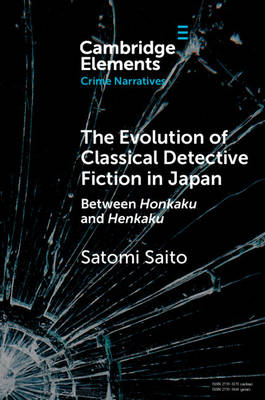
This Element traces the evolution of honkaku (orthodox) detective fiction in Japan, examining how a Western-derived puzzle genre was adapted, contested, and transformed within Japan's twentieth-century cultural climate. It begins with the genre's prewar formation, focusing on Edogawa Rampo's shift from a faithful practitioner of honkaku to a representative figure of Japan's henkaku (unorthodox) mode. The second section analyzes the postwar honkaku movement, demonstrating how Seishi Yokomizo and Seichō Matsumoto revitalized the genre while revealing the limits of the classical puzzle model. The final section turns to the New Orthodox School of the 1990s, whose writers pushed honkaku to its limits by reworking narrative structures and subverting genre conventions. By foregrounding debates surrounding honkaku, this Element theorizes detective fiction as a historically contingent system of formal constraints and cultural negotiations, positioning modern Japanese literature as a crucial site for rethinking genre, narrative logic, and the global circulation of literary forms.
Specificaties
Betrokkenen
- Auteur(s):
- Uitgeverij:
Inhoud
- Aantal bladzijden:
- 75
- Taal:
- Engels
- Reeks:
Eigenschappen
- Productcode (EAN):
- 9781009533959
- Verschijningsdatum:
- 30/06/2026
- Uitvoering:
- Paperback
- Formaat:
- Trade paperback (VS)


Alleen bij Standaard Boekhandel
+ 48 punten op je klantenkaart van Standaard Boekhandel
Cadeau

AANGERADEN


Beoordelingen
We publiceren alleen reviews die voldoen aan de voorwaarden voor reviews. Bekijk onze voorwaarden voor reviews.