


- Afhalen na 1 uur in een winkel met voorraad
- Gratis thuislevering in België vanaf € 30
- Ruim aanbod met 7 miljoen producten
- Afhalen na 1 uur in een winkel met voorraad
- Gratis thuislevering in België vanaf € 30
- Ruim aanbod met 7 miljoen producten





€ 49,95
+ 99 punten
Omschrijving
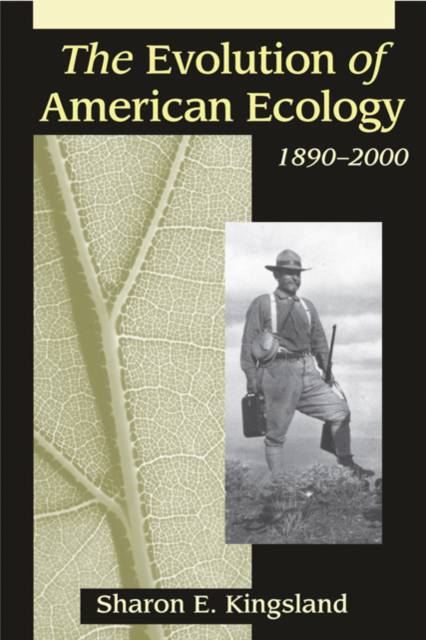
In the 1890s, several initiatives in American botany converged. The creation of new institutions, such as the New York Botanical Garden, coincided with radical reforms in taxonomic practice and the emergence of an experimental program of research on evolutionary problems. Sharon Kingsland explores how these changes gave impetus to the new field of ecology that was defined at exactly this time. She argues that the creation of institutions and research laboratories, coupled with new intellectual directions in science, were crucial to the development of ecology as a discipline in the United States. The main concern of ecology-the relationship between organisms and environment-was central to scientific studies aimed at understanding and controlling the evolutionary process. Kingsland considers the evolutionary context in which ecology arose, especially neo-Lamarckian ideas and the new mutation theory, and explores the relationship between scientific research and broader theories about social progress and the evolution of human civilization. By midcentury, American ecologists were leading the rapid development of ecosystem ecology. At the same time, scientists articulated a sharp critique of modern science and society in the postwar context, foreshadowing the environmental critiques of the 1960s. As the ecosystem concept evolved, so too did debates about how human ecology should be incorporated into the biological sciences. Kingsland concludes with an examination of ecology in the modern urban environment, reflecting on how scientists are now being challenged to overcome disciplinary constraints and produce innovative responses to pressing problems. The Evolution of American Ecology, 1890-2000 offers an innovative study not only of the scientific landscape in turn-of-the-century America, but of current questions in ecological science.
Specificaties
Betrokkenen
- Auteur(s):
- Uitgeverij:
Inhoud
- Aantal bladzijden:
- 328
- Taal:
- Engels
Eigenschappen
- Productcode (EAN):
- 9780801890871
- Verschijningsdatum:
- 1/10/2008
- Uitvoering:
- Paperback
- Formaat:
- Trade paperback (VS)
- Afmetingen:
- 145 mm x 218 mm
- Gewicht:
- 430 g


Alleen bij Standaard Boekhandel
+ 99 punten op je klantenkaart van Standaard Boekhandel
Cadeau

AANGERADEN


Beoordelingen
We publiceren alleen reviews die voldoen aan de voorwaarden voor reviews. Bekijk onze voorwaarden voor reviews.